

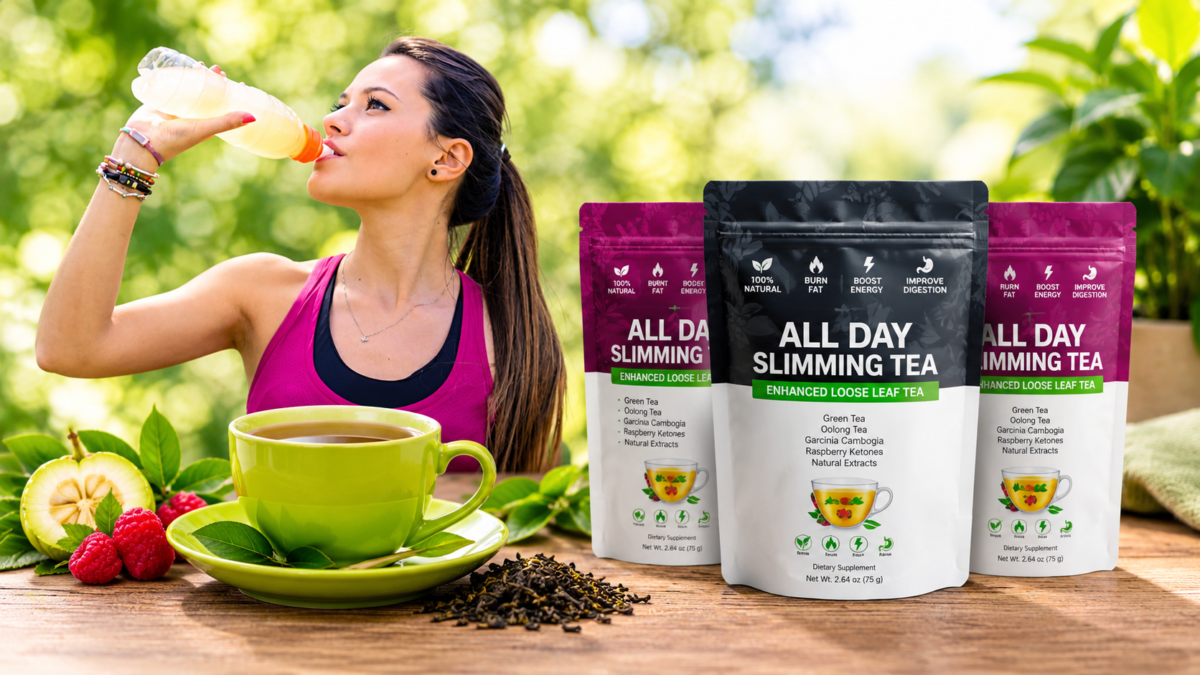
My All Day Slimming Tea Review: What I Really Found
All Day Slimming Tea’s clearest practical feature is its two-tea routine, while its weight-loss promise needs careful scrutiny. If you are weighing a new daily habit against hopes for lasting change, that difference matters. A morning cup and an evening cup offer a clear structure, but structure alone cannot prove a product causes weight loss.
My assessment is based on the product details, ingredient labels, and stated terms, not personal use. The Morning Energy Tea and Evening Detox Tea have distinct blends, and the labels leave some ingredient amounts undisclosed. The routine is easier to assess than the product’s weight-loss claims. I cannot claim personal taste notes, weight changes, or test results.
I’ll separate what the product says from what its format can reasonably show. A tea should not be presented as a proven shortcut to weight loss, and a laxative effect is not fat loss. First, it helps to see the basic product format before judging the ingredients or claims.
What Is All Day Slimming Tea?
Opening a package reveals two separate pouches: Morning Energy Tea and Evening Detox Tea. Each pouch contains 30 servings, making the product a daily system rather than one single tea. The two blends serve different parts of the day, with one intended for morning and one for evening.
Each pouch holds enough tea for 30 servings. The morning formula is positioned as an energy-focused blend, while the evening formula is a separate herbal blend. The labels list different ingredients for each, though some ingredients appear in both. This format gives the day slimming tea a set routine, instead of asking buyers to choose one tea for every cup.
A proprietary blend is a mixture whose total amount is listed while the amount of each ingredient is not disclosed. That term matters because a label can name ingredients without showing how much of each one a serving contains. The package does not combine the two teas into one pouch.
The two-pouch setup may appeal to someone who likes a morning-and-evening cue. It also means the buyer follows two formulas, not one tea used at two times. The product’s name may suggest one all-day drink, but its actual format is two separately packaged teas with different ingredient lists.
Knowing the package format helps set expectations for the daily routine. The next practical question is how to prepare and time each cup.
How Do You Prepare and Use the Two Teas?
A simple routine places one cup in the morning and another after dinner. The directions call for one tea bag per serving, with each 2 g serving brewed in 8 fl oz of water. The evening cup is ideally taken after dinner, following the product’s suggested timing.
Use one tea bag for each 8 fl oz serving. The directions describe a morning tea and an evening tea, not a single bag split across the day. A practical sequence looks like this:
- Brew one serving of Morning Energy Tea in the morning.
- Brew one serving of Evening Detox Tea after dinner.
- Follow the current package directions for preparation and timing.
The serving details give buyers a basic way to plan the routine. They do not provide a homemade All Day Slimming Tea recipe. Ordinary brewing cannot recreate the proprietary blend, especially when the label does not disclose the amount of each ingredient.
Adding common herbs or teas at home would make a different drink, not the seller’s formula. It would not show the same ingredient mix or doses. The package directions should guide use, since the exact product formula is not something a kitchen recipe can reproduce.
Once the routine is clear, the labels offer the next useful detail: what each blend contains and what they disclose about those ingredients.
What Are the All Day Slimming Tea Ingredients?
A comparison of the labels shows that the two pouches share some ingredients but are not the same blend. The Morning Energy Tea lists green tea, oolong tea, orange peel, lemongrass, ginger root, dandelion leaf, ginseng root, garcinia cambogia, monk fruit, lemon flavor, and mint flavor. The labels show two distinct formulas, even where their ingredients overlap.
Each 2 g serving contains a 2,000 mg proprietary blend, but the labels do not give each ingredient’s dose. The Morning Energy Tea label states that it contains caffeine, but does not list the amount. The Evening Detox Tea lists senna leaf, licorice root, peppermint leaf, fennel fruit, orange peel, cinnamon bark, ginger root, dandelion leaf, lemongrass, monk fruit, lemon flavor, and honey flavor.
| Attribute | Morning Energy Tea | Evening Detox Tea | Practical distinction |
|---|---|---|---|
| Total proprietary blend | 2,000 mg per 2 g serving | 2,000 mg per 2 g serving | Same total blend weight |
| Caffeine statement | Caffeine stated; amount not listed | No caffeine statement listed | Morning label names caffeine |
| Individual ingredient amounts | Not disclosed | Not disclosed | Each dose is unknown |
| Formula emphasis | Green tea, oolong tea, and listed flavors | Senna, herbs, and listed flavors | Different ingredients and intended times |
The total blend weight is not the same as a full dose breakdown. A 2,000 mg figure tells the reader the combined amount in a serving, not how much green tea, garcinia cambogia, or any other ingredient it contains. This limits direct comparison with research that uses a known dose.
The labels do let readers identify the blend’s main ingredients and its caffeine statement. They do not show the exact share each ingredient contributes. That makes the next question less about names on a label and more about whether those ingredients support the product’s weight-loss claims.
All Day Slimming Tea Review: Does It Work?
The ingredients have some research relevance, but that alone does not prove the finished product works for weight loss. Green tea has been studied in people, while garcinia cambogia research is mixed. Ingredient research is not proof of this complete formula.
The complete formula should not be treated as clinically proven to produce weight loss. There is no independent clinical trial of the finished blend described here. Evidence about one ingredient cannot confirm the effects of a product that combines many ingredients in undisclosed amounts.
What the green tea evidence can and cannot support
Green tea is among the tea ingredients studied for weight management. That research gives it some relevance, but expected effects are generally modest. It does not show that a tea will cause large or rapid weight changes for every person.
The product also includes oolong tea, but the presence of familiar tea leaves does not establish a special result. The product’s blend includes several ingredients, and the label does not show each ingredient’s dose. A study using a known amount of green tea cannot be matched easily to an undisclosed share in this formula.
That dose gap matters when people compare a product with research. Studies may use specific amounts, forms, or routines. The label’s total blend weight does not reveal whether any ingredient reaches a similar amount.
Why garcinia cambogia does not settle the question
Garcinia cambogia has also been studied for weight loss, but the evidence is mixed. Its presence does not resolve the limits around the full product. Nor does a list of several plant ingredients add up to proof of a stronger effect.
For this All Day Slimming Tea review, the fair conclusion is narrow: green tea research supports modest expectations, and garcinia cambogia evidence remains uncertain. The disclosed labels do not tell readers how much of either ingredient they receive. No evidence here establishes this finished formula as a proven weight-loss treatment.
The ingredient list can still suggest what the cups may taste like, though those expectations are not the same as tested tasting notes.
What Do the Morning and Evening Blends Taste Like?
Flavor expectations can be inferred from listed flavorings, but they cannot be confirmed without tasting the product. The morning tea lists lemon and mint flavor, along with monk fruit. Those ingredients suggest a citrus-and-mint direction, though the label cannot reveal the balance or strength in the brewed cup.
These are ingredient-based expectations, not verified tasting notes. The evening tea lists lemon and honey flavor, with monk fruit also present. Those cues may point toward a sweeter, citrus-led profile, but they do not guarantee a honey taste or a specific level of sweetness.

Peppermint leaf appears in the evening formula, while mint flavor appears on the morning label. Orange peel appears in both ingredient lists, so either tea may have a citrus note. Actual flavor can depend on the mix and brewing choices, not the ingredient names alone.
Someone who avoids sweet flavors may want to note monk fruit and the listed flavorings. Someone who likes citrus or mint may find the ingredient cues appealing, but that remains a guess until tasting. Flavor suitability is only one part of the decision; the formulas also raise safety questions.
Is All Day Slimming Tea Safe to Use?
Senna makes the Evening Detox Tea more than an ordinary caffeine-free herbal cup. Senna is a stimulant laxative, which can change bowel movements. That effect is not the same as fat loss.
People with health conditions or medication concerns should ask a healthcare professional before use. Long-term, ongoing use of stimulant laxatives can lead to dependency or electrolyte imbalance. The product packaging also advises adults taking prescription medication, or people who are pregnant or nursing, to consult a healthcare provider.
| Ingredient or situation | Concern | Practical response |
|---|---|---|
| Senna in the evening blend | Stimulant laxative effects | Ask a healthcare professional if unsure |
| Pregnancy or nursing | Packaging advises consultation | Consult a healthcare provider first |
| Prescription medication | Possible personal interaction concerns | Discuss the product with a provider |
| Continuous long-term use | Dependency or electrolyte imbalance | Avoid ongoing use without medical advice |
A laxative can affect bowel movements and the scale without reducing body fat. Changes in digestion or fluid balance should not be mistaken for a slimming result. The label also does not disclose the dose of each ingredient, which limits how precisely a reader can judge exposure.
Personal health needs differ, so a general product label cannot settle every interaction or condition. Anyone who is pregnant, nursing, takes prescription medication, or has a health concern should speak with a healthcare professional. These safety points also matter when judging scale changes and before-and-after claims.
What Can Before-and-After Results Actually Show?
A changed scale number does not by itself show a change in body fat. Weight and fat loss are not identical, especially when a laxative may affect bowel contents or fluid levels. A before-and-after image cannot prove the product caused the difference.
There is no verified basis here for promising a particular amount of weight loss. Testimonials cannot establish typical results, even when they describe a personal experience. A person’s weight may change for many reasons, and a photo rarely shows the full context.
Early changes may reflect water or bowel contents rather than a reduction in body fat. That distinction matters with a product whose evening tea contains a laxative. A lasting change requires more than a single weigh-in or a striking image.
When assessing an All Day Slimming Tea review before and after claim, I would check four details:
- Whether an independent person verified the result.
- Whether diet or activity also changed.
- How long the result lasted.
- Whether the person’s experience is typical.
A claim that leaves out these points can create an impression without showing what caused the change. A photo may capture a real person at two times, but it cannot isolate the role of a tea. The next useful comparison is between this product and ordinary teas used in weight-management routines.
Which Tea Is Most Effective for Weight Loss?
Green and oolong tea have more relevant weight-management research than a laxative effect does. Green tea is among the better-studied options, though any potential effect appears modest. No tea selectively burns belly fat.
No slimming tea is a reliable standalone weight-loss method. Green tea and oolong tea contain caffeine, and both can be part of a routine. That does not make either one a targeted fat burner or a substitute for broader habits.
| Tea type | What it contains or does | Weight-loss expectation | Main caveat |
|---|---|---|---|
| Green tea | Tea leaves; contains caffeine | Modest potential effect | Does not target belly fat |
| Oolong tea | Tea leaves; contains caffeine | Modest expectations | Not a standalone method |
| Senna-containing slimming tea | Stimulant laxative effect | Not a fat-loss effect | Can change bowel movements |
Green tea has a stronger research profile for weight management than a laxative effect, but that does not mean its benefits are large. Oolong tea also contains caffeine. A cup may fit someone’s routine, yet the evidence does not support claims that either tea melts belly fat.
Senna-containing slimming tea works differently from green or oolong tea. Its laxative action can alter bowel movements, but that is not a reduction in body fat. Comparing the three by the same scale result can blur an important difference between a modest research question and a short-term bowel effect.
People sometimes look for the most effective tea because it feels like a simple first step. I would treat tea as an optional drink, not the main tool for weight loss. The habits that shape a lasting calorie balance matter more than picking a particular cup.
That broader view shifts the focus from choosing a tea to the daily habits that matter more for losing weight.
How Can I Lose Weight Without Expecting a Tea to Do It?
No tea or single food causes fast, lasting fat loss on its own. A steady calorie deficit, supported by nutritious eating and regular activity, is more dependable than a tea. Slow, steady progress is usually more realistic.
A commonly stated pace is about 1-2 pounds per week, though individual progress varies. Weight loss depends on a person’s starting point, health, habits, and other factors. Losing 20 pounds quickly should not be treated as a safe target for everyone.
What is a realistic way to lose 20 pounds?
A realistic plan gives the body time to adjust and uses habits a person can keep. A 20-pound goal does not have one safe timeline for every person. A clinician can help set a suitable target, especially when health needs or medication affect the plan.
Cutting food sharply may seem like the fastest route, but it can be hard to sustain. A moderate calorie deficit can come from meal choices, portion size, and activity together. The goal is a steady pattern, not a quick drop that rebounds.
What contributes most to body-fat loss?
Regular activity and eating habits that support a modest calorie deficit contribute more than a slimming tea. Nutritious meals can help people feel satisfied while meeting basic needs. Sleep and daily routines can also affect how easy those habits are to maintain.
There is no need to make the plan extreme. A walk that fits a person’s schedule, a balanced meal, and a drink choice can all support routine changes. No single step guarantees a specific rate of progress.
Are there three foods everyone should drop?
No single food list suits everyone, and there are no three foods that everyone must ban. Instead, reassess choices that may add more calories than intended. Examples include sugary drinks, frequent energy-dense snacks, and oversized portions.
- Sugary drinks may be replaced more often with water or unsweetened drinks.
- Frequent energy-dense snacks may be reviewed for timing and portion size.
- Oversized portions may be adjusted to match hunger and daily needs.
These are examples to consider, not rules for every person. Someone’s health, food access, culture, and needs all shape a useful approach. Progress also varies with age and personal circumstances, so it helps to avoid judging it against one universal timeline.
Is There a Hardest Age to Lose Weight?
No one age is hardest for everyone. Weight management can change with activity, body composition, health, sleep, and life circumstances. Age is only one part of a person’s situation.
Unexplained or sudden weight changes deserve medical advice rather than blame placed on age alone. A person’s routine may shift with work, family demands, injury, or changes in sleep. Those factors can affect weight in different ways at different stages of life.

Some people find it harder to stay active as their schedules or health needs change. Others face new barriers to planning meals or getting enough rest. There is no single age that makes weight loss impossible or equally difficult for everyone.
A tea cannot account for those personal differences. Anyone who notices an unexplained or sudden change can discuss it with a healthcare professional. After considering personal fit, the next practical issue is what the packages cost and include.
How Much Do the Packages Cost?
The shorter package has a lower upfront total, while longer options list a lower cost per month. In a U.S. checkout observed September 22, 2026, the 2-month package totaled $167.95, including shipping. The longest option had the lowest listed monthly cost.
The listed monthly costs were $79 for 2 months, $69 for 3 months, and $49 for 6 months. The 3-month checkout total was $207 with free shipping, and the 6-month total was $294 with free shipping. Prices and offers can change.
| Package length | Listed cost per month | Observed U.S. checkout total | Shipping | Extras |
|---|---|---|---|---|
| 2 months | $79 | $167.95 | $9.95 | No digital bonuses listed |
| 3 months | $69 | $207 | Free | Three digital bonuses |
| 6 months | $49 | $294 | Free | Three digital bonuses |
The 2-month option showed a $158 product subtotal plus $9.95 shipping. That makes its checkout total $167.95. The longer packages lower the listed per-month amount, but ask the buyer to pay more upfront.
The 3- and 6-month options included three digital bonuses: Slim Over 55 Program, Healthy Fat Loss Desserts Cookbook and Videos, and 57 Secrets To Reverse Aging. These are presented as extras, not cash value. A bonus list does not change the tea’s formula or establish a weight-loss result.
Price matters alongside the routine and the buyer’s comfort with the ingredients. Package offers can change, so the checkout figure may differ from this dated observation. Before choosing a package, readers should understand the ordering and refund terms.
Where Can I Buy All Day Slimming Tea, and What Is the Guarantee?
Orders are made online through the seller’s order page, and the offer is for U.S. shipping only. The exact checkout total can vary by package and shipping charge. Check the final amount before paying.
The seller describes package options as one-time charges with no automatic rebilling. The 60-day return window starts from the purchase date, but the return rules include several steps. Buyers must contact support first and follow the seller’s instructions.
What to check before ordering
Before placing an order, I would check these four details:
- Package length selected.
- Final checkout total.
- Shipping charge.
- Return instructions and contact details.
The seller’s one-time-payment terms mean the selected package is charged once, without automatic rebilling. Buyers should still review the final order details and keep the order number. The return process requires contact with support before sending anything back.
How the 60-day return window works
To seek a return, buyers must contact support within the 60-day window and return all tea bags. That includes used or empty bags. The package must include the order number and return tracking information.
The buyer pays return shipping, and the seller deducts shipping and handling. The guarantee is available only once. Those terms can reduce the amount returned, so the 60-day guarantee is not the same as a no-cost trial.
Keeping the bags and tracking details matters if a return becomes necessary. These terms, along with the daily routine and its limits, help show whether the cost fits a particular buyer.
Who Is All Day Slimming Tea Worth Considering For?
This purchase is better viewed as a habit-building tea routine than as a proven weight-loss treatment. It may suit adults who already enjoy tea and like morning and evening cues. The value depends on fit, not a promise of results.
It is not a proven treatment, and it does not guarantee weight loss. Someone who wants a tested way to lose fat may prefer another approach. People uncomfortable with senna, or unwilling to pay for a structured tea routine, may also decide it is not a fit.
Who may appreciate the two-tea routine
The two blends provide separate cues for morning and evening. That structure may appeal to someone who already makes tea part of the day and wants a packaged routine. The product’s value still depends on whether its price and ingredient profile suit that person.
Before deciding, consider these four questions:
- Do you enjoy drinking tea?
- Are you willing to use two daily servings?
- Are you comfortable with the evidence limits?
- Can you accept the package cost?
Who may prefer another approach
A person seeking a proven weight-loss treatment should not rely on this product. Someone who does not want senna in an evening blend may prefer a different drink. A buyer who dislikes paying for a set routine may find ordinary tea easier to fit into a budget.
The tea also cannot replace broader habits that support weight management. Its two-part format is the clearest practical feature, but the product’s evidence does not make it a shortcut. The final choice rests on whether the routine itself is worth the cost to you.
That distinction leads to a practical verdict: consider the ritual separately from the weight-loss promise.
Conclusion
All Day Slimming Tea is best viewed as a structured tea ritual, not a shortcut to fat loss. The morning-and-evening format is its clearest appeal, giving the day a simple routine. It should not be relied on as a proven or rapid weight-loss method.
The ingredient labels and safety points deserve attention, especially if senna or caffeine matters to you. The product may suit someone who likes tea and accepts the limits, but it cannot promise a specific result.
Review the current package directions and return terms before ordering. If medication, pregnancy, nursing, or a health condition is relevant, consult a healthcare professional first.