

African Mango Before and After: What the Realistic Expectations Should Be.
Weight management is one of those quiet, persistent challenges that tends to show up at different times in life. Some years, the familiar habits of eating well and staying active feel effortless. Other years, despite the same routines, the numbers on the scale tell a different story, clothing fits tighter, and motivation to keep going wavers.
In those moments, it is natural to search for something that might help tip the balance. That is where supplements like African Mango often appear. The phrase “African Mango before and after” gets typed into search engines thousands of times, usually by people hoping for visible, measurable change. But separating what the evidence actually shows from what marketing promises is where informed decisions begin.
This review is not built around dramatic transformations or dramatic promises. It is an editorial look at what African Mango actually is, what real user experiences tend to look like, and what the clinical evidence supports. The goal is to give you realistic expectations before you spend time or money hoping for dramatic results.
What Is African Mango “Before and After” Supposed to Show?
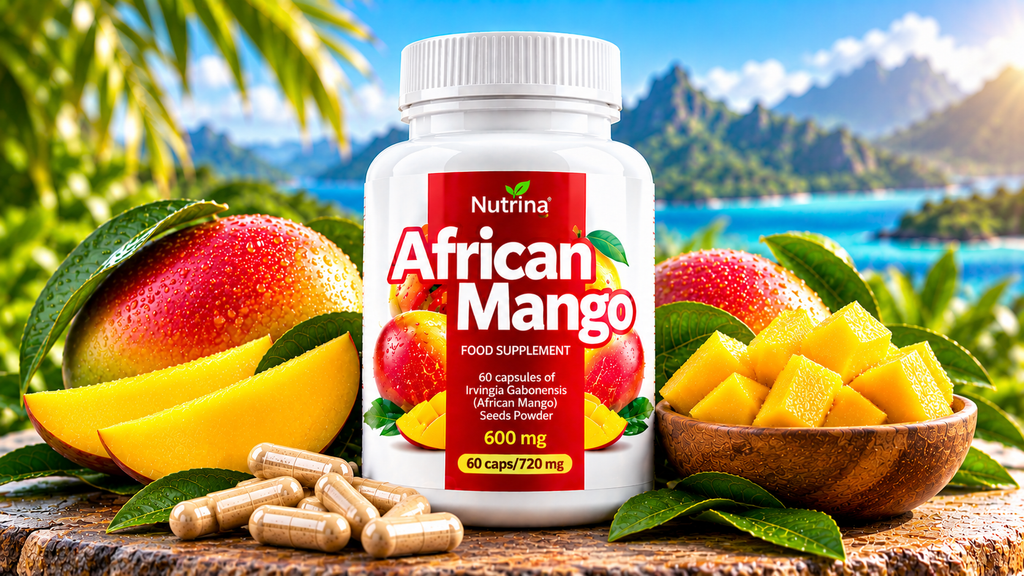
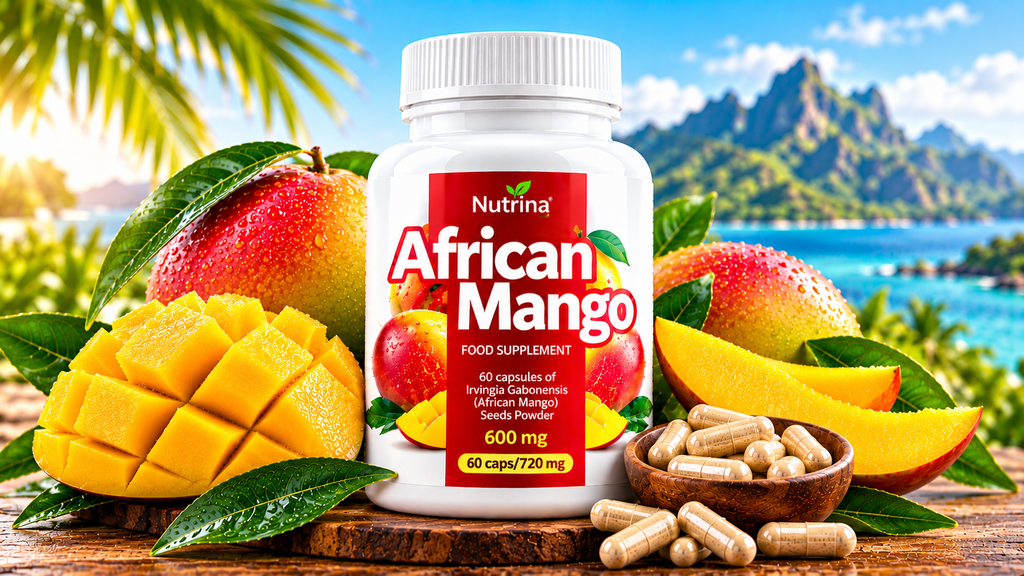
African Mango is a dietary supplement based on Irvingia gabonensis, a tree native to parts of West and Central Africa. The supplement is derived from the seed kernel of the fruit, not the sweet mango eaten fresh. According to the manufacturer, Nutrina, the current product provides 600 mg of African mango seed extract per serving.
It is positioned as a weight-management aid. In the supplement world, “before and after” typically refers to the visible results users claim to see—slimming measurements, weight loss, improved energy, or better appetite control. But here is the essential distinction: African Mango is not a meal replacement, a prescription medication, or a clinically proven obesity treatment. In the United States, United Kingdom, Canada, and Australia, it is regulated as a dietary supplement, which means manufacturers cannot legally claim it treats, cures, or prevents any disease, and the bar for evidence before sale is lower than for pharmaceuticals.
Any results associated with African Mango should be understood as possible, modest, and highly individual—not as dramatic transformations.
Why “Before and After” Claims Caught My Attention
The phrase “before and after” is powerful. It implies tangible proof that something worked. When people search for African Mango before and after, they are usually looking for reassurance that a small capsule might lead to meaningful change. That emotional appeal is precisely why it drew my attention—and why it deserves careful examination.
What initially seemed interesting is that Irvingia gabonensis has been studied in human randomized controlled trials, which is relatively rare in the supplement space. Many ingredients rely entirely on animal data, test-tube studies, or traditional use. Having actual human research gives African Mango more credibility than many similar products.
My initial reaction, however, was cautious. The supplement industry has a well-established pattern: take an early, small trial with promising results and stretch those findings into broad claims. When independent systematic reviews later identify methodological flaws, inconsistent results, or high risk of bias, those important nuances rarely make it onto marketing pages or product listings.
Compared to stimulant-heavy fat burners or proprietary blends with undisclosed ingredient amounts, African Mango’s formula is simple and transparent: one identifiable botanical extract at a declared dose. That clarity is refreshing. But clarity about what is inside the bottle does not automatically mean the bottle delivers the dramatic “before and after” results often implied in marketing.
Key Features & Product Approach
From a practical standpoint, African Mango is designed to fit quietly into a daily routine:
- Single-ingredient focus: The active material is African mango seed extract (Irvingia gabonensis), with the manufacturer specifying 600 mg per serving.
- Capsule format: Taken orally with water. There are no powders to mix, no devices to charge, no apps to sync.
- Stimulant-free profile: Based on current product information, the formula does not rely on caffeine, synephrine, or other stimulants that can cause jitters or disrupt sleep.
- No complex protocol: The manufacturer suggests consistent daily use. There is no loading phase, no specific timing around meals, and no companion products required.
- Behavioral simplicity: Taking one capsule twice daily is easy to integrate into most routines, which may help with consistency.
The product’s approach is essentially behavioral as much as physiological. The idea is that taking the extract daily may help support your weight-management efforts. Whether that happens depends on variables the bottle cannot control—diet quality, physical activity, sleep, stress, genetics, and overall metabolic health.
Realistic “Before and After” Possibilities & User Experience
When discussing any supplement, separating possibility from certainty is essential. With African Mango, realistic potential benefits should be understood as modest, indirect, and highly individual. Dramatic “before and after” transformations should not be expected.
Some users may notice that taking a daily supplement serves as a behavioral anchor—a consistent action that reinforces commitment to other healthy choices. That psychological effect is real, even if it is not pharmacological. Others might report subjective changes in appetite awareness, energy levels, or digestion. These experiences are personal and not universal.
The published research on Irvingia gabonensis paints a nuanced picture:
A 2013 systematic review identified three randomized controlled trials that reported favorable changes in body weight and waist circumference. However, the reviewers highlighted significant flaws in reporting and methodology and concluded that the effect on body weight remained unproven.
A 2020 systematic review and meta-analysis included five randomized trials. While pooled results appeared favorable for some body-composition outcomes, four of the five trials were rated at high risk of bias. Critically, the single trial rated at low risk of bias did not show significant differences in the relevant outcomes. The authors concluded that efficacy remained limited by poor methodological quality and insufficient reporting.
A 2022 randomized study examined 300 mg of Irvingia gabonensis kernel extract daily for 12 weeks in overweight and obese participants. It reported changes in vitamin C and adiponectin levels but found no between-group differences in metabolism, inflammation, aerobic capacity, and several other measured outcomes.
What this means in practice is that the ingredient has been studied in humans, but the research base is small, inconsistent, and methodologically limited. African Mango weight loss results, at least as far as the evidence shows, are not dramatic or guaranteed. Individual experiences can vary widely, and any changes are likely influenced by many factors beyond the supplement itself.
What I Liked
Several practical aspects of African Mango stand out:
- Transparent formula: The active ingredient and dose are clearly stated, with no proprietary blends obscuring ingredient amounts.
- Human research exists: Unlike ingredients supported only by animal data, Irvingia gabonensis has been tested in human randomized controlled trials.
- Stimulant-free: Based on current product information, the formula avoids stimulants that can cause jitters, sleep issues, or cardiovascular strain.
- Simple regimen: One ingredient, capsule format, no complicated dosing schedule. Easy to start and discontinue.
- Identifiable manufacturer: Nutrina maintains an official product presence, making verification easier than anonymous marketplace listings.
- Independent review clarity: Reputable sources separate affiliate links from evidence assessment, helping readers distinguish commercial placement from critical analysis.
None of these points constitute proof that African Mango produces dramatic “before and after” results. They are observations about the product’s format, transparency, and positioning.
Things to Consider
A trustworthy review must acknowledge limitations. With African Mango, several factors deserve careful thought:
- The evidence is limited and mixed: Systematic reviews consistently flag high risk of bias, small sample sizes, short durations, and insufficient reporting. The most rigorous trial to date did not demonstrate significant benefit.
- Ingredient studies do not equal product proof: Research on one Irvingia extract does not automatically validate every commercial product using the same plant species. Extraction methods, standardization, and formulations can differ.
- Marketing claims outpace evidence: Manufacturer claims about weight loss are often stronger than the conclusions supported by independent systematic reviews. Promotional language should be treated as marketing, not medical fact.
- Long-term safety is unknown: Published trials are typically short, lasting 4 to 12 weeks. Long-term safety data for daily Irvingia gabonensis supplementation is not comprehensive.
- Minor side effects reported: Some trials noted headache, sleep difficulty, gas, and gastrointestinal discomfort. These were generally mild but worth noting.
- Not a substitute for foundational habits: No supplement produces the dramatic “before and after” transformations that come from consistent nutrition, physical activity, sleep, and stress management. Relying on a single product can sometimes delay attention to higher-leverage changes.
Who African Mango May Be Suitable For
African Mango could be a reasonable consideration for:
- Adults who already understand that supplements are optional and want to evaluate an Irvingia-based product with transparent labeling.
- People who prefer stimulant-free formulas and want to avoid caffeine or other central nervous system stimulants.
- Individuals with modest, realistic expectations who view supplementation as a possible complement—not a replacement—to an evidence-based nutrition and activity plan.
- Anyone who has discussed supplement use with a qualified healthcare provider and received personalized guidance.
If you fall into one of these categories and approach the product with measured expectations, it may be worth a short trial period—provided you monitor your response and stop if anything feels off.
Who Should Be More Cautious
This product is not appropriate for everyone. You should exercise extra caution if:
- You are expecting dramatic “before and after” weight-loss results. No supplement delivers that.
- You are pregnant, breastfeeding, or planning pregnancy. Robust product-specific safety evidence in these populations is lacking.
- You are taking prescription medications—particularly for blood sugar, cholesterol, blood pressure, or other metabolic conditions. Botanical extracts can interact with drug metabolism or effects.
- You have a diagnosed medical condition. Supplements are not a substitute for medical care.
- You have a history of disordered eating or tend to fixate on dramatic visual results. Adding a “weight-loss supplement” can sometimes reinforce unhelpful psychological patterns.
No wellness product fits every person, and it is perfectly reasonable to decide that African Mango is not right for you.
Safety, Quality & Trust Factors
African Mango is sold by Nutrina through its official product channels. The brand’s website provides product imagery, a declared ingredient list, and basic usage directions. However, the site does not appear to publish third-party lab testing results, such as certificates of analysis, or certifications like NSF or Informed Sport that can be independently verified.
Independent evidence-led reviews emphasize that manufacturer claims around weight management are marketing statements, not established clinical outcomes. They also highlight that long-term safety and effectiveness are not well established, and that ingredient research should not be confused with proof of the exact finished product.
Regarding refund policies or satisfaction guarantees: these details can change and are not consistently published in a single verifiable location. Before purchasing, check the current seller’s terms directly—especially the return window, restocking fees, and whether opened bottles are eligible. Do not assume a money-back guarantee exists without confirming it.
If you have any medical complexity, consult a qualified healthcare professional before using African Mango or any new supplement.
Where to Buy & Important Note
If you decide to try African Mango, the most direct source is the manufacturer’s official product page or authorized distributors. Purchasing through verified channels reduces the risk of receiving counterfeit, expired, or improperly stored products—a genuine concern with popular supplements sold through unauthorized third-party marketplaces.
Be cautious of heavily discounted listings on auction sites, social media shops, or unfamiliar retailers. These may be gray-market goods with no quality assurance.
Before ordering, review the current formula on the physical label, confirm shipping costs and delivery timelines to your country, and read the return policy carefully. Treat the purchase as an experiment with an optional product, not as a medical investment.
Final Verdict
African Mango is a transparent, single-ingredient supplement built around Irvingia gabonensis seed extract at a declared 600 mg dose. It avoids proprietary blends, stimulants, and unnecessary fillers—qualities that are increasingly rare in the weight-management category.
However, the evidence supporting Irvingia gabonensis for weight loss is limited, inconsistent, and methodologically weak by systematic-review standards. The most rigorous trial to date did not demonstrate significant benefit. Marketing claims often exceed what the data can support.
If you are curious about the ingredient, have realistic expectations, and treat supplementation as an optional adjunct to—not a replacement for—foundational health habits, African Mango may be worth evaluating for a defined period. Track your response honestly, stay grounded in the fundamentals, and involve a healthcare professional if you have any medical complexity.
If you are looking for dramatic, clinically proven “before and after” weight-loss results, this is not it. The most reliable levers for body composition remain nutrition, movement, sleep, and stress management—perhaps less photogenic than a single supplement, but consistently more dependable.
Frequently Asked Questions
What kind of African Mango before and after results should I really expect?
Some small trials of Irvingia gabonensis extracts have reported weight-related changes, but systematic reviews judge the evidence limited by study quality and risk of bias. It should not be described as a proven weight-loss treatment. Expect modest, individual variation rather than dramatic visual results.
Is African Mango the same as regular mango?
No. The supplement is based on Irvingia gabonensis, commonly called African mango or bush mango, and the marketed extract is obtained from its seeds. The fruit eaten fresh or sold in stores is typically a different species altogether.
Is African Mango stimulant-free?
The verified product information describes African mango seed extract as the active material. Always inspect the current physical label before use because formulations can change over time.
Is African Mango safe for long-term use?
Short-term trials have generally reported limited adverse events such as headache or mild digestive discomfort. However, long-term and product-specific safety evidence is not comprehensive. Consult a healthcare provider if you plan extended use.