

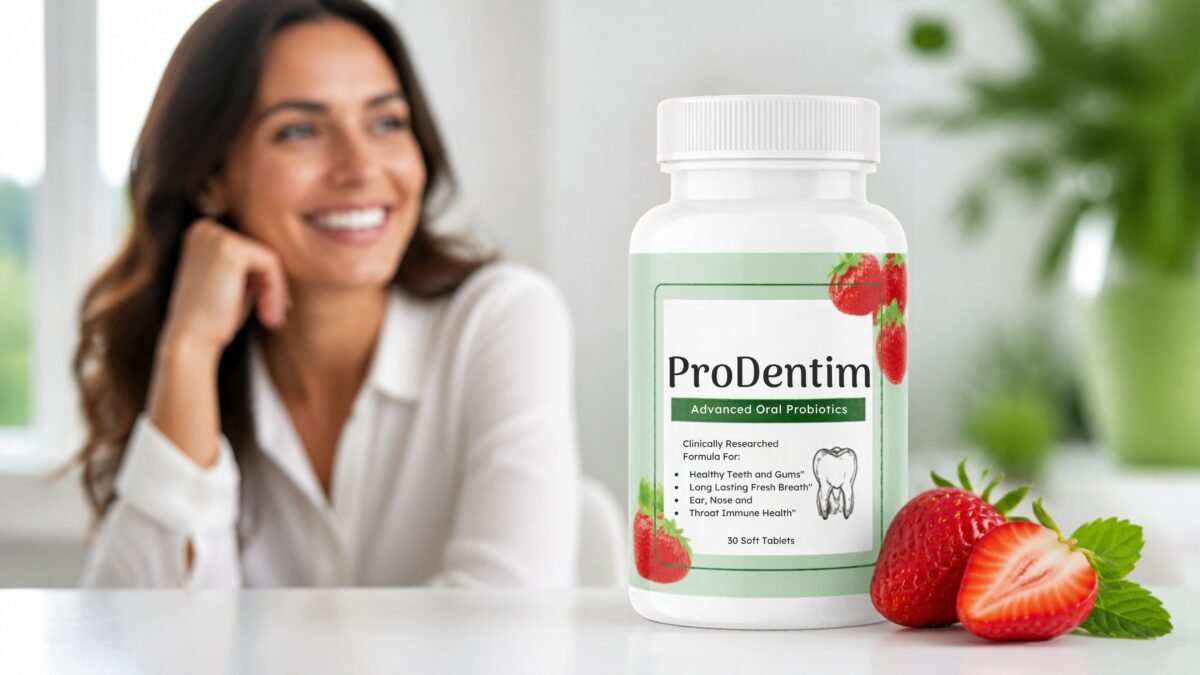
ProDentim Ingredients: What the Research Supports Before You Buy
An oral-health supplement should make its formula easy to understand. If you are considering one for bad breath or gum concerns, you need more than recognizable bacterial names. The exact strains, quantities, and delivery method determine whether published research is relevant.
ProDentim combines three named bacterial ingredients with inulin, malic acid, tricalcium phosphate, and peppermint. That makes it worth examining, but an ingredient’s presence does not establish that the finished product provides a meaningful dental benefit.
For jonas-purereviews, this assessment takes an independent product-analysis approach: distinguish disclosed formula details from assumptions, interpret clinical studies cautiously, and identify where evidence cannot be transferred to the product. It does not claim personal use of ProDentim or professional dental credentials.
My main question was whether its advertised probiotic count provides enough information to compare the formula with human studies. It does not.
This review explains the ingredients, missing label details, safety considerations, alternatives, directions, and purchasing terms. Product verification uses the supplied website extract rather than a live checkout inspection. Independent customer-review data were unavailable.
Quick answer: The listed ProDentim ingredients are Lactobacillus paracasei, B. lactis BL-04, Lactobacillus reuteri, inulin, malic acid, tricalcium phosphate, and peppermint. The supplied page does not provide a complete Supplement Facts panel, individual ingredient amounts, or strain codes for both lactobacilli. That limits conclusions about effectiveness and safety.
What Is ProDentim?
ProDentim is an oral-probiotic supplement whose directions recommend slowly chewing one tablet every morning. The page also describes it as a dissolvable candy, so the actual bottle label should confirm administration.
Its apparent audience is adults exploring supplemental support for breath freshness, teeth, and gums. That positioning does not establish suitability for a diagnosed dental condition.
ProDentim and ProvaDent are different products. Their ingredients, serving instructions, and purchasing terms should not be interchanged.
Manufacturer, Origin, and Quality Claims
| Detail | What the supplied extract establishes |
|---|---|
| Product name | ProDentim |
| Manufacturer’s legal identity | Not identified |
| Manufacturing country | Not established |
| Retailer | ClickBank, which is not identified as the manufacturer |
| GMP certification | Not established |
| Purity testing | Claimed by the seller; no laboratory identity or batch report is supplied |
| Independent third-party testing | Not established |
| Gluten-free and non-GMO status | Claimed by the seller; independently unverified here |
| Facility description | The seller uses “FDA-approved facility” wording, which does not establish FDA approval of the product |
The FDA explains that dietary supplements are not approved for safety and effectiveness before marketing. The facility wording should not be treated as an independently verified certification or product endorsement.
Comparison With Oral-Probiotic Alternatives
These are category comparisons, not endorsements. Current formulations, prices, and availability require separate confirmation.
| Product | Comparison context | What to examine |
|---|---|---|
| NOW OralBiotic | Oral-probiotic product associated with BLIS K12 | Current strain declaration and research for your intended outcome |
| Life Extension FLORASSIST Oral Hygiene | Oral-probiotic product associated with BLIS M18 | Current formula, viable count, and strain-specific evidence |
| BioGaia Prodentis | Oral-probiotic product associated with specific L. reuteri strains | Whether the current preparation matches relevant clinical studies |
| ProDentim | Multi-ingredient oral formula | Missing strain codes, individual quantities, and finished-product evidence |
A clearly identified strain makes a product easier to investigate. It does not automatically establish superior effectiveness or safety.
How Does ProDentim Work?
The proposed approach is to introduce microorganisms into the mouth alongside ingredients intended to influence their environment.
Dental plaque is a structured microbial community. Oral disease involves interactions among microbes, diet, saliva, hygiene, and the person’s biological response, rather than simply a shortage of “good bacteria.”
The peer-reviewed article “Dental plaque as a biofilm and a microbial community: implications for health and disease” explains this ecological perspective.
Some probiotic strains may affect microbial competition or inflammatory responses. However, a plausible mechanism is not proof of fewer cavities, healthier gums, or permanent changes to the oral microbiome.
No finished-product ProDentim clinical trial was verified for this assessment. Consequently, broad benefits involving dental treatment, allergy prevention, or improved sleep cannot be established from the evidence reviewed here.
Why “3.5 Billion” Is Not Enough
The supplied page alternates between “3.5 billion probiotics” and “3.5 billion probiotic strains.” Those terms are not equivalent.
- Species identifies a microbial group.
- Strain identifies a particular lineage within that group.
- Colony-forming units, or CFUs, estimate viable microorganisms under specified testing conditions.
The page does not clearly establish a label-level CFU declaration, the contribution of each strain, or potency guaranteed through expiry. A large total count cannot answer those questions.
Ingredient Analysis: What the Research Shows
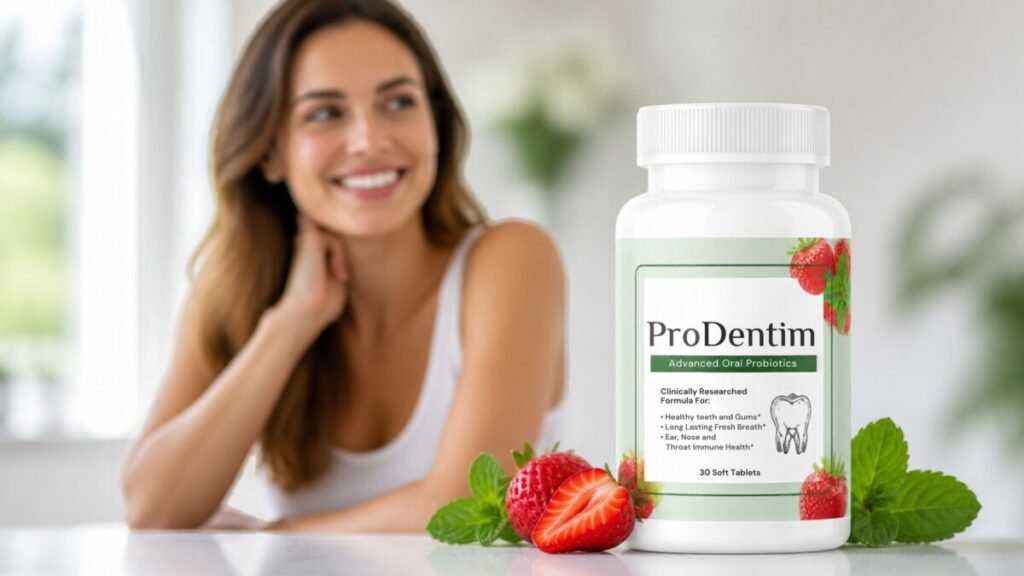
The seven listed components are discussed below in six subsections, with malic acid and tricalcium phosphate considered together because both require formulation-specific assessment.
| Listed component | Information supplied | Information missing |
|---|---|---|
| Lactobacillus paracasei | Species name | Strain code and quantity |
| B. lactis BL-04 | Strain identifier | Quantity and expiry potency |
| Lactobacillus reuteri | Species name | Strain codes and quantity |
| Inulin | Ingredient name | Amount and source |
| Malic acid | Ingredient name | Amount and finished-product acidity |
| Tricalcium phosphate | Ingredient name | Amount and formulation performance |
| Peppermint | Ingredient name | Preparation and quantity |
The absence of these details from the extract does not prove they are absent from the bottle. It means they were not available for this assessment.
Lactobacillus Paracasei
Lactobacillus paracasei, now also classified as Lacticaseibacillus paracasei, is a bacterial species containing multiple strains.
Human studies involving strains such as SD1 have examined oral bacterial counts and caries-related outcomes. Relevant trials are indexed in PubMed’s L. paracasei SD1 literature.
Some studies used milk-based delivery and specific populations. Those findings cannot establish the effect of an unidentified strain in a chewable tablet.
Dose comparison: ProDentim’s strain code and individual quantity are unavailable. No clinically meaningful dose match is possible.
Assessment: Promising strain-specific research, but insufficient evidence for this product.
Bifidobacterium Lactis BL-04
The page identifies BL-04, making this entry more specific than the two lactobacilli. Still, evidence involving another bifidobacterial strain cannot be transferred automatically.
A randomized trial by Invernici and colleagues, “Effects of Bifidobacterium probiotic on the treatment of chronic periodontitis”, studied B. animalis subsp. lactis HN019 alongside periodontal treatment.
The study reported improvements in selected outcomes, but HN019 is not BL-04. It therefore does not establish an oral-health benefit from the strain listed in ProDentim.
Dose comparison: BL-04’s quantity is undisclosed. An HN019 study cannot establish an effective BL-04 dose.
Assessment: Useful strain identification, but directly applicable dental evidence remains unestablished here.
Lactobacillus Reuteri
Lactobacillus reuteri, also called Limosilactobacillus reuteri, has been studied in oral-health settings.
A randomized placebo-controlled trial by Teughels and colleagues, “Clinical and microbiological effects of Lactobacillus reuteri probiotics in the treatment of chronic periodontitis”, reported improvements in selected outcomes when a particular preparation accompanied scaling and root planing.
That treatment context matters. Participants received professional periodontal care; the trial did not establish that a probiotic alone treats periodontitis.
Dose comparison: ProDentim’s strain codes and quantity are unavailable, preventing a match to the tested preparation.
Assessment: Promising adjunctive findings for certain preparations, not proof of ProDentim’s effectiveness.
The broader evidence is also less decisive than individual positive trials suggest. The European Federation of Periodontology’s S3 guideline suggests not routinely using probiotics as an adjunct to subgingival instrumentation.
Inulin
Inulin is a fermentable carbohydrate commonly discussed as a prebiotic.
The scientific consensus statement on the definition and scope of prebiotics explains that a prebiotic must be selectively used by host microorganisms and confer a health benefit.
Gut-related inulin research does not establish that an unspecified amount in an oral tablet selectively supports beneficial mouth bacteria or improves dental outcomes.
Dose comparison: The amount in ProDentim is undisclosed. No product-relevant oral-health dose can be established here.
Assessment: Legitimate prebiotic research context, but an unverified contribution to this formula.
Malic Acid and Tricalcium Phosphate
Malic acid is an organic acid found in fruits. Tricalcium phosphate is a calcium-phosphate compound.
Neither ingredient’s name establishes a whitening or tooth-repair benefit. Dental effects depend on the entire preparation, including acidity, solubility, exposure time, and interaction with saliva.
The consensus report “Erosive tooth wear: diagnosis and management” explains why acidity and exposure characteristics matter.
Separately, the review “Calcium phosphate systems for dental remineralization” discusses formulation-specific approaches. Findings for one calcium-phosphate delivery system do not validate every tablet containing a calcium salt.
Dose comparison: Neither ingredient’s quantity nor the tablet’s pH is supplied. No reliable clinical comparison is possible.
Assessment: Formulation-dependent ingredients with unestablished ProDentim benefits. The available information proves neither a remineralizing effect nor an erosion risk from the finished tablet.
Peppermint
Peppermint contains compounds investigated for antimicrobial activity, often in laboratory settings.
The review “A review of the bioactivity and potential health benefits of peppermint tea” discusses experimental findings and limitations in human evidence.
Laboratory activity does not establish that peppermint in ProDentim reduces gum inflammation or treats dental disease.
Dose comparison: The extract does not specify leaf, oil, extract, or flavoring, or disclose an amount. These preparations are not interchangeable.
Assessment: Limited product-relevant clinical evidence.
What a Complete Formula Disclosure Should Include
Before purchasing, obtain:
- A readable Supplement Facts panel.
- Full genus, species, and strain identifiers.
- CFUs per serving, with clarity about potency through expiry.
- Quantities of the non-probiotic ingredients.
- All other ingredients, including sweeteners, binders, and flavors.
- Allergen and storage information.
These details would make assessment possible. They would not, by themselves, prove effectiveness.
What Real Users Are Saying
No independently verified ProDentim review collection from Amazon, Trustpilot, Reddit, or another external platform was available for analysis.
This review cannot substantiate:
- An independent rating or verified purchase count.
- Recurring benefits or common complaints.
- Typical side effects.
- Consistent shipping or refund experiences.
Seller-hosted testimonials are not being used as independent customer evidence. No positive or negative patterns are invented to fill the gap.
Even genuine customer experiences cannot isolate the supplement’s contribution if a person also changes toothpaste, improves cleaning, or receives dental treatment.
Key Benefits Based on Evidence and User Feedback
No ProDentim-specific clinical benefit can be confirmed from the evidence assessed here.
The narrower conclusions are:
- Clinical research suggests selected probiotics may improve certain periodontal measures alongside treatment. Those findings concern specific preparations and do not establish routine benefit from ProDentim.
- Some probiotics may improve short-term bad-breath measures. A systematic review in BMJ Open found outcome-dependent benefits, not consistent plaque or tongue-coating improvements.
- Several listed ingredients have plausible biological roles. Plausibility supports further study, not a promise of results.
- Verified user-reported benefits remain unavailable. No defensible customer consensus can be summarized.
Pros and Cons
| Pros | Cons |
|---|---|
| Main ingredient categories are disclosed | Complete quantities and other ingredients are unavailable |
| BL-04 is specifically identified | Two bacterial strain identities are incomplete |
| A baseline daily instruction is supplied | CFU allocation and expiry potency are unclear |
| Oral probiotics have relevant category-level research | No finished-product clinical trial was verified |
| A 60-day refund promise is advertised | Return logistics are incomplete |
| International shipping estimates are supplied | Product prices are blank and shipping statements conflict |
Who Is ProDentim Best Suited For?
The current information does not establish ProDentim as the best choice for a particular group. Three reader profiles may have reason to investigate further:
- Adults with persistent bad breath after dental assessment: A dentist may discuss an identified probiotic strain as an adjunct if evidence fits the concern.
- Adults receiving periodontal care: They can ask whether a studied preparation has a relevant role, recognizing that guidelines do not support routine probiotic use.
- Adults comparing optional oral-health supplements: They should prioritize complete labels and relevant evidence over a large advertised bacterial count.
None of these profiles establishes a reason to start ProDentim before its full formula is available.
Who Should Avoid ProDentim?
Do not start ProDentim without professional guidance if you are:
- Pregnant or breastfeeding: Safety of the complete formulation has not been established here for these populations.
- Under 18: Broad age-related marketing does not establish pediatric suitability.
- Taking medication: A pharmacist needs the complete formula and your medication list to assess compatibility.
- Immunocompromised, seriously ill, or receiving complex treatment: The NIH probiotic fact sheet notes rare serious infections, particularly in vulnerable patients.
- Managing significant allergies, digestive sensitivity, reflux, or dental erosion: Ingredient preparation and product characteristics may affect suitability.
Persistent bleeding, sensitivity, or bad breath deserves dental assessment. Facial swelling with fever or dental pain needs urgent evaluation; difficulty breathing or swallowing requires emergency care.
When in doubt, speak with your doctor or pharmacist before adding any supplement to your routine.
Realistic Expectations and Timeline
There is no verified ProDentim-specific timeline for improvement.
Some probiotic studies assess breath outcomes within four weeks. The Teughels periodontal trial followed participants for 12 weeks alongside professional treatment. Neither establishes a universal response time for this supplement.
Individual experiences may vary with oral hygiene, diet, saliva flow, tobacco exposure, genetics, consistency, existing disease, and concurrent treatment. These differences do not establish effectiveness.
Do not postpone care while waiting for a supplement effect. A bundle’s bottle count is not a clinically supported treatment duration.
How to Use ProDentim
The supplied official-page directions recommend slowly chewing one tablet every morning.
The page also describes a dissolvable product. Confirm the exact administration instructions on the bottle rather than borrowing directions from a different brand.
The extract does not establish:
- Timing relative to brushing or breakfast.
- A food or drink waiting period.
- Storage temperature or refrigeration requirements.
- A missed-dose regimen.
- A higher safe daily intake.
Do not increase intake because results are unclear or discontinue prescribed dental products to accommodate the supplement.
Evidence supporting fluoride toothpaste is substantially stronger than the product evidence available here; see the Cochrane review of fluoride toothpastes.
Is ProDentim Safe?
The ingredient summary is insufficient for a complete safety assessment. That is not proof that the product is unsafe, but it rules out a confident “safe for everyone” conclusion.
Potential considerations include:
- Probiotics: Gas or other digestive symptoms can occur; medically vulnerable people require additional caution.
- Inulin: Fermentable carbohydrates can cause bloating and flatulence. Relevant research includes “Gastrointestinal tolerance of chicory inulin products”.
- Peppermint oil: If this preparation is present, possible effects include heartburn and allergic reactions, as summarized by NIH NCCIH.
- Malic acid: Dental implications depend on the finished tablet’s acidity and exposure characteristics.
These are ingredient-level considerations, not verified ProDentim adverse-effect rates.
No complete medication-interaction assessment is possible without the actual label. Purity testing also cannot guarantee an absence of allergies or adverse reactions.
Pricing, Packages and Where to Buy
Package Prices Are Missing
The supplied page contains empty price fields. Quoting amounts from another product or an older offer would be misleading.
| Package | Bottle count | Product price | Package-card shipping |
|---|---|---|---|
| Single unit | Not listed | Unavailable | Unavailable |
| Basic | 2 | Not displayed | $9.99 |
| “Most popular” | 3 | Not displayed | Advertised as free |
| “Best value” | 6 | Not displayed | Advertised as free |
Supply durations are also blank. The seller’s “best value” designation cannot be independently evaluated without prices and serving counts.
Shipping to International Markets
| Destination | Fee in shipping-policy table | Seller’s delivery estimate |
|---|---|---|
| United States | Free | 5–7 working days |
| Canada | $15.95 | 10–15 working days |
| UK and Ireland | $15.95 | 10–15 working days |
| Australia and New Zealand | $15.95 | 10–15 working days |
The US policy conflicts with the basic package’s $9.99 charge. Bundle-card free-shipping statements also require clarification for international orders.
Confirm billing currency, taxes, import requirements, delivery eligibility, and the final charge. These are seller estimates, not independently verified delivery outcomes.
The 60-Day Money-Back Guarantee
The page advertises a 60-day money-back guarantee and also mentions returning unused product for a refund.
Before paying, establish:
- Whether the period starts at ordering or delivery.
- Whether returning unused product is mandatory.
- Whether empty bottles or packaging are required.
- Who pays return postage.
- Whether original shipping and taxes are refundable.
- How international returns are handled.
A broad refund promise does not resolve these practical questions.
Purchasing and Counterfeit Precautions
The request identifies prodentim101.com as the official sales page. Its footer names ClickBank as retailer, but manufacturer ownership or authorization of the domain was not independently established here.
If you decide to buy, use only a verified official seller’s checkout, rather than an unverified reseller, to reduce counterfeit risk and avoid uncertainty over guarantee eligibility. This precaution does not establish that counterfeits have been documented or guarantee refund entitlement.
Obtaining the complete label, final price, and written terms is a sensible next step before purchasing.
Final Verdict
The listed ProDentim ingredients include microorganisms with legitimate research interest. However, species names and a large advertised count do not establish clinical effectiveness.
The decisive gaps are incomplete strain identification, undisclosed quantities, uncertain expiry potency, and unavailable finished-product trial evidence. The supporting ingredients also require preparation-specific assessment.
Adults with persistent breath concerns may benefit from dental evaluation and discussion of an identified probiotic preparation. People with periodontal disease need established treatment, while those without a defined need may reasonably skip an unproven supplement.
My conclusion: obtain the full label before deciding. If the seller cannot provide the information needed to compare the formula with research, choosing not to buy is reasonable.
Frequently Asked Questions
Do ProDentim ingredients have clinical evidence for oral health?
Some listed bacterial species have relevant research, but effects depend on exact strains and preparations. Findings involving HN019, for example, do not establish benefits from BL-04. No finished-product ProDentim clinical trial was verified here.
Are ProDentim ingredients safe with medication?
A reliable interaction assessment requires the complete label and your medication list. The supplied extract does not provide all ingredient quantities or other ingredients. Ask a pharmacist or doctor before use, particularly if you are immunocompromised or seriously ill.
Where should I buy ProDentim?
The supplied sales-page URL is prodentim101.com, whose footer identifies ClickBank as retailer. Manufacturer authorization of the domain was not independently verified here. Confirm the seller, full label, final price, and written terms before ordering.
What is the ProDentim return policy?
The page advertises a 60-day guarantee and mentions returning unused product. The starting date, return-postage responsibility, and treatment of original shipping charges are unclear. Obtain those details in writing before purchase.
How do ProDentim ingredients compare with other oral probiotics?
NOW OralBiotic, Life Extension FLORASSIST Oral Hygiene, and BioGaia Prodentis provide alternatives associated with identifiable strains. ProDentim’s incomplete strain and dose information makes study matching harder. No comparative evidence assessed here establishes it as superior.
About the Author
jonas-purereviews is an independent product researcher and health supplement analyst focused on clearer purchasing decisions. The review approach centers on reading clinical studies, tracking user feedback across platforms when verifiable information is available, and comparing ingredient labels with published research. Unanswered questions stay visible because uncertainty matters when health and money are involved. All content published here is based on independent research and analysis. It is not intended as medical advice.