


KeraBiotics Side Effects: What You Should Know Before Buying.
Nail fungus is one of those conditions that tends to linger in the background. It does not usually announce itself with drama—just a faint yellowing at the tip of a toenail, a slight thickening that makes trimming difficult, a corner that lifts when it catches on a sock. For many people, it is an occasional cosmetic nuisance. For others, it becomes a persistent source of frustration that resists drugstore creams and invites awkward moments at the pool or in sandals.
That is where products like KeraBiotics enter the conversation. Marketed as a probiotic-based topical formula, it has built a visible presence online with thousands of listed reviews and a prominent satisfaction guarantee. But when you are considering putting something on your body twice a day for months, the question of side effects—and whether the product is genuinely gentle—deserves a straight answer.
This review takes an editorial approach. It is not a testimonial, a medical endorsement, or a sales pitch. The goal is to offer a balanced, realistic perspective on what KeraBiotics contains, what the evidence suggests about its safety profile, and what buyers should consider before committing.
What Is KeraBiotics?
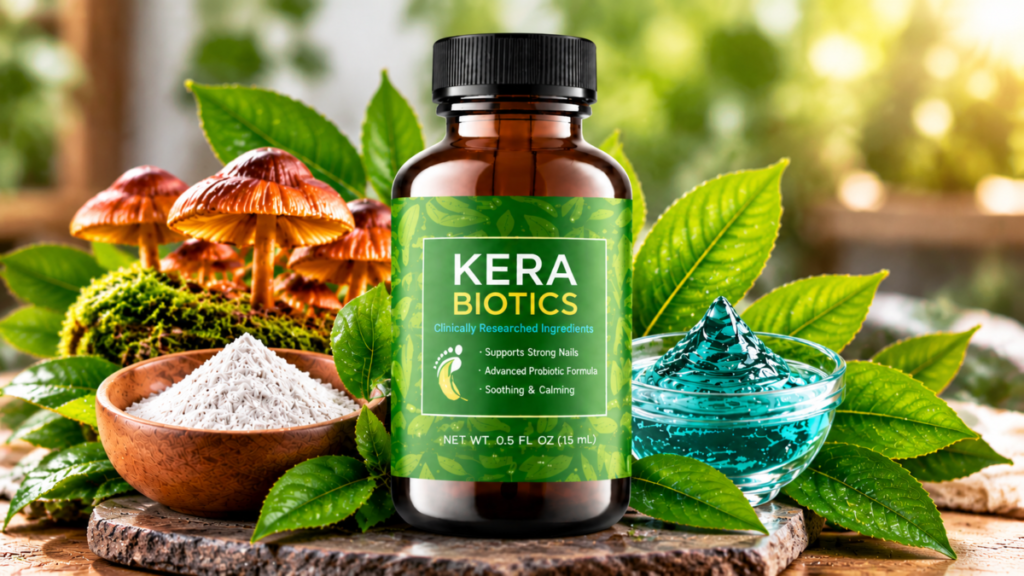
KeraBiotics is a topical nail treatment sold through thekerabiotics.com (with order processing handled by BuyGoods). According to the product’s published information, it is described as a “meticulously-crafted natural formula” designed to help people dealing with nail fungus. The product is positioned as a probiotic-based solution that reintroduces beneficial bacteria to support the nail microbiome.
The formula is a liquid applied with a brush and applicator, intended for topical use on affected nails. The manufacturer recommends applying it once in the morning and once at night.
The full ingredient list, as disclosed on the product page, includes:

- Deionized Water
- Aloe Barbadensis Leaf Juice
- Glycerin
- Cucumis Sativus (Cucumber)
- Palmitoyl Oligopeptide
- Chrysin
- H-Hydroxysuccinimide
- Palmitoyl Tetrapeptide-7
- Palmitoyl Pentapeptide-3
- Steareth 20
- Polysorbate 20
- Carbomer
- Phenoxyethanol
- Caprylyl Glycol (Optiphen)
- Lactobacillus Paracasei
- Lactobacillus Rhamnosus
- Bifidobacterium Lactis
- Lactobacillus Acidophilus
- Copper Gluconate
- Potassium Sorbate
It is important to state clearly: KeraBiotics is not a medication, a prescription treatment, or a clinically proven cure for nail fungus. In the United States, United Kingdom, Canada, and Australia, topical nail treatments like this are generally regulated as cosmetics or dietary supplements, not drugs. That means manufacturers cannot legally claim the product diagnoses, treats, cures, or prevents any disease, and the standard of evidence required to bring it to market is lower than what applies to pharmaceuticals.
Any effects—whether positive or negative—should be understood as possible, subjective, and highly individual.
Why KeraBiotics Side Effects Caught My Attention
Most supplement and topical treatment reviews focus almost entirely on potential benefits. Far fewer examine what might go wrong, or how users might react after applying a product twice daily for weeks or months. That imbalance is what initially drew my attention to KeraBiotics side effects specifically.
The product’s marketing emphasizes its “natural formula,” “no stimulants,” and “non-GMO” status. The vendor claims that “more than 87,000 customers” have used the product with “no notable side effects reported” and that “all ingredients have been proven safe in clinical trials.” These are strong safety claims—and they deserve scrutiny.
My initial reaction was cautious. The wellness industry has a well-established pattern of highlighting ingredient-level safety data while lacking product-specific clinical trials. An ingredient may be safe in isolation at a certain concentration, but the finished formula—combining multiple actives, preservatives, and penetration enhancers—can behave differently. Additionally, “no notable side effects” in marketing materials is not the same as systematic post-market surveillance.
Compared to conventional antifungal treatments (which can cause local irritation, burning, or allergic reactions in some users), a probiotic-based formula with skin-conditioning ingredients like aloe and glycerin does appear gentler on paper. But “gentler” does not equal “risk-free,” and individual sensitivity varies enormously.
Key Features & Product Approach
From a practical standpoint, KeraBiotics presents several notable characteristics relevant to its safety profile:
- Topical liquid format: Applied directly to nails with a brush. No systemic absorption through the digestive tract, which inherently limits certain categories of side effects.
- Probiotic blend: Four Lactobacillus and Bifidobacterium strains. These are generally recognized as safe for topical use, though live probiotic stability in a liquid cosmetic formula is a formulation challenge.
- Skin-conditioning base: Aloe vera leaf juice, glycerin, and cucumber extract are well-established humectants and soothing agents with long safety histories in cosmetics.
- Peptide complex: Palmitoyl oligopeptide, tetrapeptide-7, and pentapeptide-3 are common in anti-aging skincare. Topical safety data exists for cosmetic use concentrations.
- Preservative system: Phenoxyethanol and caprylyl glycol (Optiphen) are standard cosmetic preservatives. Phenoxyethanol is restricted to ≤1% in the EU and Canada; the formula does not disclose exact concentrations.
- Copper gluconate: Included at cosmetic levels. Copper peptides have some evidence for skin remodeling, but excessive copper absorption through compromised nail beds is theoretically possible though unlikely at cosmetic concentrations.
- No stimulants: Consistent with a topical nail product.
- Simple application routine: Twice daily. No complex protocols that might increase exposure risk.
The product’s approach is essentially: apply a probiotic-infused, peptide-enhanced liquid to affected nails twice daily. The goal is to support the nail microbiome and create a “protective shield” against fungal infections.
Whether side effects occur depends on variables the product cannot control: the integrity of the user’s nail and surrounding skin, pre-existing sensitivities, concurrent medications or treatments, and individual immune response.
Possible Benefits & User Experience
When discussing any topical treatment, it is essential to separate possibility from certainty. With KeraBiotics, any potential benefits are best described as modest, indirect, and highly individual.
Some users may notice that a twice-daily application routine creates a behavioral anchor—a consistent action that reinforces attention to foot care and nail hygiene. That psychological effect is real, even if it is not pharmacological. Others might report subjective improvements in nail appearance, such as reduced discoloration, less thickening, or smoother texture. These experiences are personal and not universal.
The published research on probiotics specifically for nail fungus is limited. While probiotics are well-studied for gut health and some skin conditions (like atopic dermatitis), direct clinical evidence supporting topical probiotic application for onychomycosis is sparse. Most of the evidence base for nail fungus treatments centers on oral antifungals (terbinafine, itraconazole) and topical antifungals (ciclopirox, efinaconazole, tavaborole), which have decades of clinical data behind them.
The ingredients in KeraBiotics—aloe, cucumber, glycerin, peptides—are generally associated with moisturizing and skin-conditioning effects. They are unlikely to cause harm when applied topically to intact skin, but they are also not established antifungal treatments. Copper gluconate has antimicrobial properties in laboratory settings, but topical application at cosmetic concentrations is not a proven nail fungus treatment.
What this means in practice: KeraBiotics may help support nail appearance and comfort for some users. It may provide a gentle, non-irritating option for those who prefer probiotic-based approaches. It should not be described as a proven cure for nail fungus, and dramatic results should not be expected. Individual experiences can vary widely.
What I Liked (From a Safety Perspective)
Several practical aspects of KeraBiotics stand out as positive observations from a safety and transparency standpoint:
- Full ingredient transparency: The complete ingredient list is publicly disclosed with specific probiotic strains named. No hidden “proprietary blend” obscuring what is actually in the bottle.
- No systemic exposure route: Topical application to nails dramatically limits systemic absorption compared to oral supplements or medications. This inherently reduces the risk of systemic side effects and drug interactions.
- Recognized cosmetic ingredients: The base formula (water, aloe, glycerin, cucumber, peptides) consists of ingredients with extensive cosmetic use histories and well-characterized safety profiles.
- Standard preservative system: Phenoxyethanol/caprylyl glycol is a widely used, well-studied preservative pair in leave-on cosmetics. While some individuals are sensitive to phenoxyethanol, it is generally considered safe at regulatory-approved concentrations.
- 60-day money-back guarantee: A two-month satisfaction guarantee provides a consumer protection window if adverse reactions occur or the product simply does not work.
- Non-GMO claim: May matter to consumers avoiding genetically modified ingredients.
- No auto-ship enrollment: The vendor states orders are one-off purchases with no hidden autoship clauses.
None of these points constitute proof that KeraBiotics is side-effect-free for everyone. They are observations about the product’s formulation choices and consumer protections.
Things to Consider (Potential Concerns)
A trustworthy review must acknowledge limitations and potential risks. With KeraBiotics, several factors deserve careful thought:
1. No product-specific clinical safety trial. The vendor’s claim that “all ingredients have been proven safe in clinical trials” refers to individual ingredients studied in various contexts—not the finished KeraBiotics formula tested as a complete product for nail fungus. There is no published clinical trial specifically evaluating KeraBiotics for safety or efficacy.
2. Live probiotic stability concerns. The formula lists four Lactobacillus/Bifidobacterium strains. Maintaining viable probiotic cultures in a liquid, room-temperature cosmetic formula with preservatives (which are designed to kill bacteria) is a significant formulation challenge. If the probiotics are non-viable, the core mechanism of action is compromised. If they are viable, the preservative system must be carefully balanced—which could affect microbial contamination risk.
3. Phenoxyethanol sensitivity. While generally safe at ≤1%, phenoxyethanol can cause contact dermatitis in sensitive individuals. The product does not disclose the exact concentration. Users with known phenoxyethanol allergy should avoid this product.
4. Copper absorption through compromised nails. Onychomycosis often involves nail plate thickening, lifting, and damage to the nail bed. Copper gluconate applied to compromised nail tissue could theoretically allow greater copper absorption than application to intact skin. While unlikely to reach toxic levels from cosmetic use, individuals with Wilson’s disease or copper metabolism disorders should exercise caution.
5. Peptide irritation potential. Palmitoyl peptides are generally well-tolerated but can cause irritation in sensitive individuals, especially when applied to damaged skin around the nail fold.
6. “Natural” does not mean “hypoallergenic.” Aloe, cucumber, and other botanical extracts can cause allergic contact dermatitis in sensitized individuals. The term “natural formula” is a marketing descriptor, not a safety certification.
7. Complaint patterns suggest quality control variability. Recurring user complaints about products arriving damaged, leaking, or appearing contaminated suggest potential manufacturing or shipping quality control issues that could introduce safety risks independent of the formula itself.
8. Not a substitute for medical treatment. Moderate to severe onychomycosis—especially with nail matrix involvement, multiple nails, or associated pain—typically requires medical evaluation. Delaying appropriate treatment while trying an over-the-counter cosmetic can allow the infection to progress.
Who KeraBiotics May Be Suitable For
KeraBiotics could be a reasonable consideration for:
- Individuals with mild, superficial nail discoloration who prefer a gentle, transparently labeled topical approach.
- People who have tried conventional antifungal treatments and found them irritating (e.g., contact dermatitis from clotrimazole or terbinafine creams) and want an alternative with a different ingredient profile.
- Those who already maintain good foot hygiene and want a supplementary product to support nail appearance and cuticle health.
- Consumers who value full ingredient transparency, no systemic exposure, and a satisfaction guarantee.
If you fall into one of these categories and approach the product with measured expectations, it may be worth a trial period—provided you patch-test first, monitor for irritation, and discontinue if any adverse reaction occurs.
Who Should Be More Cautious
This product is not appropriate for everyone. You should exercise extra caution if:
- You have diabetes, peripheral vascular disease, or a compromised immune system. Nail conditions in these populations can progress rapidly to serious infections (cellulitis, osteomyelitis). Self-treating with a cosmetic product risks delaying necessary medical intervention.
- You have moderate to severe nail fungus. If multiple nails are affected, the nail matrix is involved, or there is pain, swelling, or spreading redness, you need medical evaluation—not a cosmetic topical.
- You are pregnant or breastfeeding. While topical absorption is minimal, product-specific safety data in these populations does not exist. Consult your healthcare provider.
- You have known allergies to any listed ingredient. Particularly phenoxyethanol, caprylyl glycol, aloe, or copper compounds.
- You have eczema, psoriasis, or contact dermatitis around the nails. The peptide complex and preservatives could exacerbate inflammatory skin conditions.
- You are taking prescription medications for fungal infections. Combining topical products without medical guidance could cause unexpected interactions or irritation.
- You have a history of metal sensitivity or copper metabolism disorders. Copper gluconate, while generally safe at cosmetic levels, warrants caution in these specific cases.
- You are expecting rapid or guaranteed results. Nail treatments require months of consistent use due to slow nail growth (toenails grow ~1-2mm/month). No topical product works quickly.
No wellness product fits every person, and it is perfectly reasonable to decide that KeraBiotics is not right for you.
Safety, Quality & Trust Factors
KeraBiotics is sold through thekerabiotics.com with payment processing by BuyGoods. The product page includes standard disclaimers noting that statements have not been evaluated by the FDA and that the product is not intended to diagnose, treat, cure, or prevent any disease.
Manufacturing transparency: The vendor claims the product is “constantly tested for purity and to ensure against toxins and contaminants” and that ingredients are “proven safe in clinical trials.” However, the page does not publish:
- Third-party laboratory certificates of analysis (CoAs) for the finished product
- GMP (Good Manufacturing Practice) certification details
- Stability testing data for the live probiotic strains
- Microbial challenge test results for the preservative system
- Heavy metal testing reports
Regulatory context: As a cosmetic/topical product in the US, KeraBiotics falls under FDA cosmetic regulations (not drug regulations). The manufacturer is responsible for ensuring safety, but pre-market approval is not required. In the UK/EU, it would fall under the Cosmetic Products Regulation (EC) No 1223/2009, requiring a Product Information File and safety assessment—but the vendor does not reference compliance documentation.
Refund policy: The 60-day “iron-clad” money-back guarantee is a meaningful consumer protection on paper. However, user complaints about refund processing difficulties suggest the practical experience may not always match the promise. Before purchasing, review the current terms: are opened bottles eligible? Is a return authorization required? Who pays return shipping?
Adverse event reporting: There does not appear to be a formal adverse event reporting mechanism published on the site. Cosmetic manufacturers in the US are encouraged (not required) to report serious adverse events to the FDA’s CAERS system.
Where to Buy & Important Note
If you decide to try KeraBiotics, the official website (thekerabiotics.com) is the most direct source. Purchasing through verified channels reduces the risk of receiving counterfeit, expired, or improperly stored products—a genuine concern with popular topical treatments sold through unauthorized third-party marketplaces.
Be cautious of heavily discounted listings on auction sites, social media shops, or unfamiliar retailers. These may be gray-market goods with no quality assurance, potentially stored in conditions that degrade the probiotic components or compromise preservative efficacy.
Before ordering:
- Review the current formula on the physical label when it arrives (formulations can change)
- Confirm shipping costs and delivery timelines to your country (free US shipping; $15.95 for Canada, UK, Ireland, Australia, New Zealand)
- Read the return policy carefully and screenshot it for your records
- Patch-test on a small area of skin (inner forearm) 24 hours before first nail application
- Treat the purchase as an experiment with an optional cosmetic product, not as a medical investment
Final Verdict
KeraBiotics is a topical nail cosmetic built around a blend of probiotics, skin-conditioning botanicals, peptides, and copper gluconate. It presents a transparent ingredient list, a simple twice-daily application routine, and a 60-day satisfaction guarantee—qualities that make it a relatively low-risk product to evaluate for those interested in a gentle, probiotic-infused approach to nail care.
Regarding KeraBiotics side effects specifically: the ingredient profile suggests a low potential for systemic side effects due to the topical route of administration. The base ingredients (aloe, glycerin, cucumber, peptides) have extensive cosmetic safety histories. The preservative system (phenoxyethanol/caprylyl glycol) is standard and generally well-tolerated, though phenoxyethanol sensitivity does occur in a minority of users. The live probiotic component introduces formulation stability questions but minimal safety risk even if non-viable.
However, the product lacks finished-product clinical safety testing, third-party verification, and published stability data for its probiotic strains. Marketing claims about “no notable side effects” across 87,000+ customers are not independently verified and should be viewed as promotional language rather than post-market surveillance data.
If you have mild, cosmetic nail concerns, no known sensitivities to the listed ingredients, and want to try a transparently labeled topical formula with a money-back guarantee, KeraBiotics may be worth a cautious trial. Patch-test first. Apply consistently. Monitor for any redness, itching, burning, or worsening of nail condition. Discontinue immediately if irritation occurs.
If you have significant nail fungus, underlying health conditions (especially diabetes or immune compromise), or concerns about the vendor’s quality control based on shipping complaints, consult a healthcare professional before relying on an over-the-counter cosmetic product alone.
The most reliable approach to nail health remains consistent hygiene, proper footwear, moisturized nail beds, and professional medical guidance when needed.
Frequently Asked Questions
What are the most common KeraBiotics side effects reported?
The manufacturer states that no notable side effects have been reported among 87,000+ customers. However, independent user reviews occasionally mention mild local irritation, redness, or itching around the nail fold. As with any topical product, contact dermatitis is possible in sensitive individuals, particularly to phenoxyethanol, fragrance components (though none listed), or botanical extracts.
Is KeraBiotics safe for people with diabetes?
People with diabetes should exercise extreme caution with any nail product. Diabetic foot complications (reduced sensation, impaired circulation, delayed healing) mean that even minor irritation or an untreated fungal infection can escalate quickly. Consult a podiatrist or physician before using KeraBiotics or any over-the-counter nail treatment if you have diabetes.
Can KeraBiotics cause allergic reactions?
Yes, any topical product can cause allergic contact dermatitis in sensitized individuals. The formula contains aloe, cucumber extract, peptides, phenoxyethanol, and copper gluconate—all potential (though uncommon) allergens. Patch-test on the inner forearm for 24 hours before applying to nails. Discontinue immediately if rash, swelling, or intense itching develops.
Should I stop using KeraBiotics if I notice side effects?
Yes. If you experience persistent redness, burning, itching, swelling, blistering, or worsening of the nail condition after starting KeraBiotics, discontinue use immediately and consult a healthcare provider. Do not continue using a product that causes discomfort hoping it will “work through it”—this can delay proper treatment and worsen the condition.