


Is KeraBiotics Legit? A Balanced Review Before You Buy
Nail fungus is one of those quiet, persistent concerns that tends to linger in the background. It does not usually announce itself with drama—just a faint yellowing at the tip of a toenail, a slight thickening that makes trimming awkward, a corner that lifts when it catches on a sock. For many people, it is an occasional cosmetic nuisance. For others, it becomes a stubborn source of frustration that resists drugstore creams and invites awkward moments at the pool or in sandals.
That is exactly where products like KeraBiotics enter the conversation. Marketed as a probiotic-based topical formula, it has built a visible presence online with bold claims about rebuilding the nail microbiome. But when a product promises a novel solution to a common problem, the question “Is KeraBiotics legit?” is not just reasonable—it is essential.
This review takes an editorial approach. It is not a testimonial, a medical endorsement, or a sales pitch. The goal is to offer a realistic, balanced perspective on what KeraBiotics is, what the evidence actually supports, and what buyers should weigh before committing—especially given the current status of the official website.
What Is KeraBiotics?
KeraBiotics is a topical nail treatment that was sold through thekerabiotics.com. According to the product’s historical presentation, it is described as a “meticulously-crafted natural formula” designed to help people dealing with nail fungus. The product is positioned as a probiotic-based solution that reintroduces beneficial bacteria to support the nail microbiome.
The formula is a liquid applied with a brush and applicator, intended for topical use on affected nails. The manufacturer recommended applying it once in the morning and once at night.
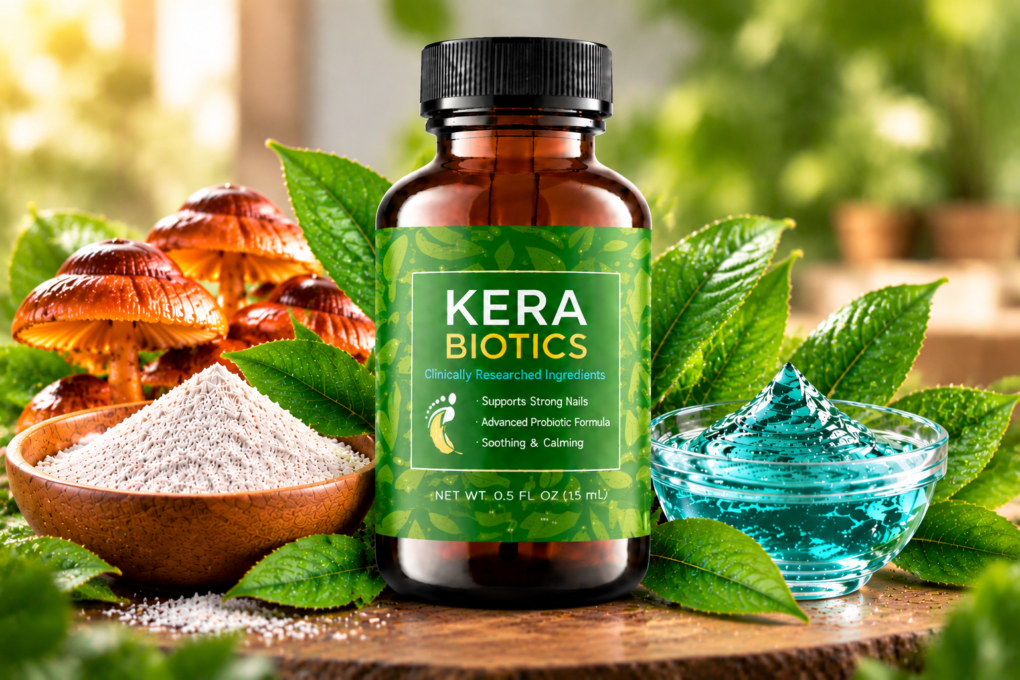
The ingredient list, as previously disclosed on the product page, included:
- Deionized Water
- Aloe Barbadensis Leaf Juice
- Glycerin
- Cucumis Sativus (Cucumber)
- Palmitoyl Oligopeptide
- Chrysin
- H-Hydroxysuccinimide
- Palmitoyl Tetrapeptide-7
- Palmitoyl Pentapeptide-3
- Steareth 20
- Polysorbate 20
- Carbomer
- Phenoxyethanol
- Caprylyl Glycol (Optiphen)
- Lactobacillus Paracasei
- Lactobacillus Rhamnosus
- Bifidobacterium Lactis
- Lactobacillus Acidophilus
- Copper Gluconate
- Potassium Sorbate
It is important to state clearly: KeraBiotics is not a medication, a prescription treatment, or a clinically proven cure for nail fungus. In the United States, United Kingdom, Canada, and Australia, topical nail treatments like this are generally regulated as cosmetics or dietary supplements, not drugs. That means manufacturers cannot legally claim the product diagnoses, treats, cures, or prevents any disease, and the standard of evidence required to bring it to market is lower than what applies to pharmaceuticals.
Any effects—whether positive or negative—should be understood as possible, subjective, and highly individual.
Why “Is KeraBiotics Legit?” Caught My Attention
The question of legitimacy usually arises when marketing claims outpace verifiable evidence. With KeraBiotics, several factors triggered that scrutiny.
First, the mechanism is unconventional. Most over-the-counter nail fungus treatments rely on antifungal agents like clotrimazole, miconazole, or tea tree oil. KeraBiotics proposes a “microbiome” approach—reintroducing good bacteria (Lactobacillus and Bifidobacterium strains) to crowd out fungal overgrowth. While the gut-skin axis is a legitimate area of research, direct clinical evidence for topical probiotic application on nails specifically is extremely thin.
Second, the origin story. The “sacred Amazonian barefoot tribe ritual” narrative is a classic marketing trope in the supplement space. It creates emotional resonance but contributes zero scientific validity. When a brand leans heavily on an exotic origin story rather than clinical data, it warrants a closer look at what is actually in the bottle.
Third, and most critically for a legitimacy assessment: the official website (thekerabiotics.com) currently returns a 404 error. As of this review, the primary sales channel, the source for ingredient verification, the terms of the 60-day guarantee, and the contact point for customer support are inaccessible. A legitimate, ongoing commercial operation typically maintains a functional storefront. A dead domain raises immediate questions about operational continuity, customer support availability, and the ability to honor refund policies.
My initial reaction was significant skepticism. The combination of a novel, unproven mechanism, a marketing-heavy origin story, and a currently non-functional official website creates a “trust gap” that no amount of ingredient transparency can fully bridge.
Key Features & Product Approach
Based on the historical product presentation, KeraBiotics offered the following characteristics:
- Topical liquid format: Applied with a brush directly to nails. No systemic ingestion required.
- Probiotic blend: Four strains (L. Paracasei, L. Rhamnosus, B. Lactis, L. Acidophilus) commonly found in oral probiotics, here formulated for topical use.
- Skin-conditioning base: Aloe vera, glycerin, cucumber extract—standard cosmetic humectants and soothing agents.
- Peptide complex: Palmitoyl peptides (Oligopeptide, Tetrapeptide-7, Pentapeptide-3) often used in anti-aging skincare for barrier support.
- Copper Gluconate: Included for potential antimicrobial properties, though at cosmetic concentrations.
- Preservative system: Phenoxyethanol and Caprylyl Glycol (Optiphen), standard for water-based cosmetics.
- Simple routine: Twice daily application. No complex protocols.
- 60-day guarantee: Historically advertised as a “no questions asked” refund policy.
The product’s approach was behavioral as much as biological: apply twice daily, maintain the habit, and the formula may support a healthier nail environment.
Possible Benefits & User Experience
When discussing any topical treatment, separating possibility from certainty is essential. With KeraBiotics, any potential benefits are best described as modest, indirect, and highly individual.
Moisturizing and Conditioning (Most Likely Benefit). The base formula—aloe, glycerin, cucumber, peptides—is well-suited to hydrating the nail fold, cuticle, and surrounding skin. Some users may notice softer cuticles, less brittle nail plates, and reduced dryness around the nail. These are genuine cosmetic benefits that do not require any antifungal or probiotic activity.
Behavioral Anchor. A twice-daily routine forces attention on the nails. That psychological effect—better hygiene, earlier detection of changes, consistent care—is real, even if it is not pharmacological.
Subjective Nail Appearance. Some users might report reduced discoloration or smoother texture. These experiences are anecdotal. Nail appearance fluctuates naturally; improvements may coincide with product use but stem from other factors (seasonal changes, diet, footwear, natural immune response).
Microbiome Support (Theoretical). The core claim—rebalancing the nail microbiome via topical probiotics—is biologically plausible but clinically unproven for onychomycosis. There are no published randomized controlled trials testing KeraBiotics, or any similar topical multi-strain probiotic, for nail fungus eradication. The preservative system (phenoxyethanol) also raises questions about probiotic viability in the bottle.
Antifungal Action (Unlikely). None of the ingredients are recognized antifungal actives at pharmaceutical concentrations. Copper gluconate has lab-demonstrated antimicrobial effects, but cosmetic topical delivery to the nail bed (through the hard keratin plate) is a significant pharmacological hurdle.
What this means in practice: KeraBiotics may function as a decent nail and cuticle conditioner. It should not be described as a treatment for nail fungus. Individual experiences can vary widely.
What I Liked
Based on the previously available product information, several aspects stood out as positive:
- Full Ingredient Transparency: The complete INCI list with specific probiotic strains was disclosed. No “proprietary blend” hiding doses.
- Stimulant-Free / Non-GMO Claims: Aligns with clean-label preferences.
- Simple, Non-Invasive Format: Topical brush application avoids systemic side effects inherent to oral antifungals (liver toxicity, drug interactions).
- Generous Guarantee (Historically): A 60-day window is longer than the industry standard 30 days, offering a reasonable trial period if honored.
- No Auto-Ship Trap: Historically marketed as a one-time purchase, avoiding predatory subscription models.
These are observations about product design, not endorsements of efficacy.
Things to Consider
A trustworthy review must highlight the friction points. With KeraBiotics, they are significant:
- The Website is Down (Critical). The official domain (thekerabiotics.com) returns a 404. You cannot verify current pricing, read the actual refund policy terms, contact support, or confirm the formulation hasn’t changed. Buying from third-party sellers (Amazon, eBay, unauthorized retailers) when the brand’s own storefront is dark carries high risk of counterfeit, expired, or diverted stock.
- Zero Product-Specific Clinical Evidence. No RCTs, no pilot studies, no case series published on KeraBiotics itself. The “clinical trials” referenced in marketing refer to individual ingredients in unrelated contexts.
- Probiotic Viability is a Black Box. Live bacteria in a preserved, water-based liquid at room temperature for months is a formulation nightmare. Without third-party CFU (colony forming unit) testing at expiry, you don’t know if the “active” ingredients are alive.
- Marketing vs. Reality Gap. “Protective shield,” “rebuild microbiome,” “powerful fungus formula” are marketing phrases. The FDA disclaimer on the site explicitly negated disease treatment claims.
- Price vs. Value. Historically priced as a premium specialty product ($69-$49/bottle depending on bundle). For a cuticle conditioner with theoretical probiotic benefits, that is a steep ask.
- Not a Medical Substitute. Moderate/severe onychomycosis (thick, crumbling, multiple nails, matrix involvement) requires oral terbinafine/itraconazole or prescription topicals (efinaconazole, tavaborole). Delaying real treatment risks permanent nail damage and spread.
Who KeraBiotics May Be Suitable For
Given the current constraints (website down, no clinical proof), the suitable audience is extremely narrow:
- Someone with very mild, purely cosmetic nail dullness/dryness who wants a premium cuticle oil alternative.
- Someone who understands the probiotic angle is experimental, has no diabetes/immune issues, and wants to self-experiment with a 60-day safety net (assuming the guarantee is still honored by the payment processor).
- Someone who values ingredient transparency and a stimulant-free topical format above all else.
Who Should Be More Cautious
This product is likely not appropriate for you if:
- You have confirmed or suspected nail fungus. You need a diagnosis and evidence-based treatment, not a cosmetic experiment.
- You have diabetes, PAD, or immunosuppression. Self-treating foot/nail issues is dangerous in these populations.
- You cannot access the official website. If thekerabiotics.com is down, you cannot verify the current guarantee, contact support, or ensure product authenticity.
- You are pregnant/nursing. Topical safety of live probiotics + peptides + copper in this specific combo is unestablished.
- You expect a “cure.” This product does not cure nail fungus.
- You are budget-conscious. Cheaper, proven antifungals (OTC clotrimazole, terbinafine cream) or simple oils (tea tree, coconut, Vicks VapoRub—anecdotal but cheap) exist.
Safety, Quality & Trust Factors
Manufacturing Transparency: Historically low. The site claimed “GMP certified facility” and “tested for purity” but never published CoAs (Certificates of Analysis), third-party lab names, or stability data for probiotics.
Regulatory Status: Cosmetic (US), not an FDA-approved drug. No NDC number. The FDA disclaimer was present on the site.
Refund Policy: Historically a 60-day guarantee via BuyGoods (payment processor). Crucially: If the vendor site is down, you may need to contact BuyGoods directly for refunds. Check their current policy.
Adverse Event Reporting: No dedicated pharmacovigilance channel visible.
Current Trust Signal: Negative. A dead official domain is the strongest negative trust signal in e-commerce. It suggests business cessation, platform migration issues, or enforcement action. Until the domain resolves with a functional, secure storefront, “legitimacy” as an active, supportable commercial entity is questionable.
Where to Buy & Important Note
Do not buy from thekerabiotics.com right now—it returns a 404 error.
If the product returns to a functional official site:
- Verify the SSL certificate (padlock icon).
- Read the current refund/return policy (screenshot it).
- Confirm shipping costs to USA/UK/CA/AU.
- Check for auto-ship pre-checked boxes at checkout.
If buying from third parties (Amazon, etc.) while the official site is down:
- You are buying “gray market” stock. No manufacturer warranty/guarantee applies.
- Risk of expired product (probiotics die), counterfeit, or improper storage (heat kills probiotics).
- Prices may be inflated by resellers.
Recommendation: Wait until the official website is restored and functional for at least 30 days, demonstrating operational stability, before considering a purchase. Or, consult a podiatrist/dermatologist for proven options.
Final Verdict
Is KeraBiotics legit? As a product concept: It is a real cosmetic formula with a transparent ingredient list and a plausible moisturizing mechanism. It is not a “scam” in the sense of a fake product taking money and shipping nothing (historically).
As a nail fungus treatment: No. It lacks the active ingredients, clinical evidence, and regulatory status to claim legitimacy here.
As a currently viable purchase: No. The official website being down (404) is a dealbreaker for a trustworthy recommendation. You cannot verify the guarantee, get support, or ensure product freshness/authenticity.
If you have nail concerns, the most legitimate path remains: See a professional. A $20 copay for a dermatology visit yields a diagnosis and access to treatments that actually work. KeraBiotics, in its current state, is an unverifiable cosmetic experiment at a premium price.
Frequently Asked Questions
Is KeraBiotics legit for treating nail fungus?
No. KeraBiotics is a cosmetic topical product, not an antifungal medication. There are no clinical trials proving it cures onychomycosis. Its ingredients are primarily moisturizers and theoretical probiotics, not proven fungicides.
Is the KeraBiotics official website working?
As of this review, no. The domain thekerabiotics.com returns a 404 Not Found error. This means you cannot currently verify product details, pricing, guarantees, or contact the manufacturer directly through their primary channel.
Can I still get a refund if I bought KeraBiotics before the site went down?
You would need to contact the payment processor, BuyGoods, directly. Their refund policy governs the transaction. Do not rely on the vendor’s website (currently down) to process the request. Check your order confirmation email for BuyGoods support links.
Are there any side effects to using KeraBiotics?
The manufacturer claims no notable side effects. However, cosmetic ingredients (phenoxyethanol, peptides, copper, botanical extracts) can cause contact dermatitis, redness, or itching in sensitive individuals. Patch test on forearm skin before applying to nails. Discontinue if irritation occurs.