


PrimeBiome Benefits: What You Should Know Before Buying.
The connection between gut health and skin appearance has moved from niche wellness forums into mainstream conversation. Most people have noticed the link anecdotally—a breakout after a week of poor eating, a dull complexion when digestion feels sluggish, a glow that returns with consistent hydration and whole foods. That observable relationship is why “skin-gut” supplements have grown so quickly.
PrimeBiome enters that space as a daily probiotic gummy. Its marketing centers on the idea of “skin-gut cell turnover,” suggesting that a specific blend of bacteria, herbs, and prebiotic fiber can support the body’s natural renewal processes. The product has a visible online presence and a long ingredient list that mixes familiar probiotic strains with traditional botanicals.
This review takes an editorial look at PrimeBiome. It is not a testimonial, a medical endorsement, or a sales pitch. The goal is to offer a balanced, realistic perspective on what the product is, what benefits the ingredients might plausibly support, and what buyers should consider before committing.
What Is PrimeBiome?
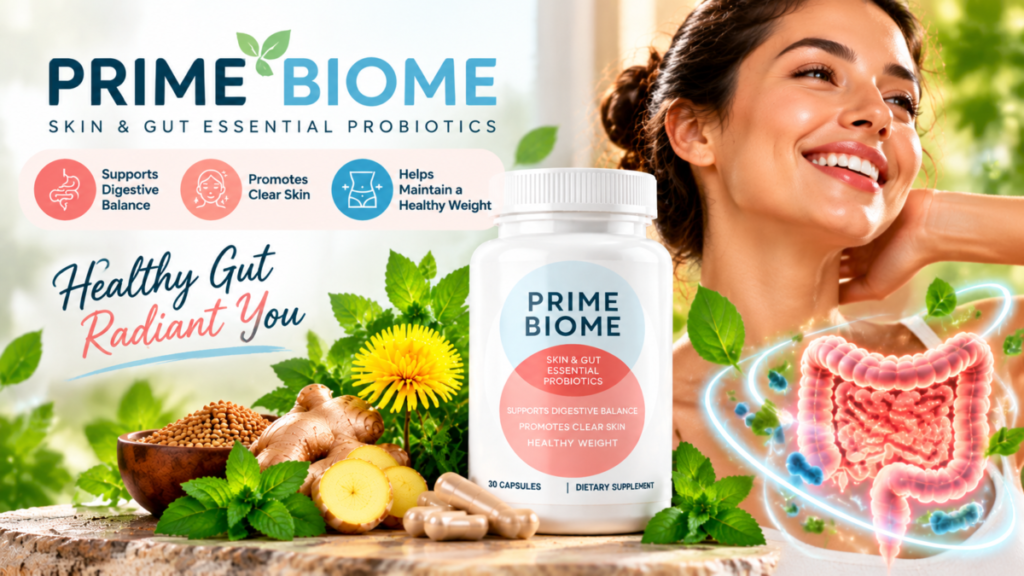
PrimeBiome is a dietary supplement sold through theprimebiome.com. It is formulated as a chewable gummy—one per day—designed to be taken without water. The brand positions it as a “skin-gut” support product, linking the health of the microbiome to the skin’s natural cell turnover cycle.
According to the product page, the formula is a “proprietary blend of nourishing ingredients.” The label lists the following components:
- B. Coagulans (a spore-forming probiotic strain)
- Babchi (Psoralea corylifolia seed extract)
- Dandelion (Taraxacum officinale)
- Fennel (Foeniculum vulgare)
- Inulin (a prebiotic fiber, typically from chicory root)
- Fenugreek (Trigonella foenum-graecum)
- Lemon Balm (Melissa officinalis)
- Organic Ceylon Ginger (Zingiber officinale)
- Organic Lion’s Mane (Hericium erinaceus mushroom)
- Slippery Elm Bark (Ulmus rubra)
The product is labeled as a natural formula, non-GMO, and stimulant-free. It is sold in multi-bottle bundles (30, 90, or 180-day supplies) with a 60-day money-back guarantee. Order processing is handled by BuyGoods.
It is important to state clearly: PrimeBiome is a dietary supplement, not a drug. In the United States, United Kingdom, Canada, and Australia, it is regulated as a food product. The manufacturer cannot legally claim it diagnoses, treats, cures, or prevents any disease. The website’s own disclaimer notes that statements have not been evaluated by the FDA and that the product is not intended to diagnose, treat, cure, or prevent any disease. Any benefits discussed here are theoretical or based on ingredient-level data, not clinical trials on the finished formula.
Why PrimeBiome Benefits Caught My Attention
What makes PrimeBiome’s ingredient list stand out is its breadth. Most skin-focused probiotics stick to one or two strains—usually Lactobacillus or Bifidobacterium—and perhaps a prebiotic. PrimeBiome throws a wider net: a spore probiotic, a medicinal mushroom, several digestive herbs, a prebiotic fiber, and a specific botanical (Babchi) that has a distinct history in traditional skin applications.
My initial reaction was curiosity mixed with the usual supplement-industry skepticism. A long ingredient list can signal a thoughtful, synergistic formulation. It can also signal “kitchen sink” formulation—adding small amounts of many trendy ingredients to make the label look impressive, without delivering effective doses of any single one.
Because the blend is proprietary, the exact milligram amount of each ingredient is not disclosed. We only know the total weight of the blend per gummy. That opacity makes it impossible to verify if, for example, the Lion’s Mane is dosed at the 500mg–1000mg range commonly used in cognition studies, or at 10mg for “label claim” purposes. The same applies to the probiotic CFU count, the Inulin fiber dose, and the herbal extracts.
Compared to a targeted probiotic (e.g., a clinically studied L. rhamnosus GG product at 10 billion CFU) or a standalone Lion’s Mane extract standardized to beta-glucans, PrimeBiome’s approach is less transparent but potentially more convenient. The trade-off is the central tension of this product.
Key Features & Product Approach
From a practical standpoint, PrimeBiome is built for adherence:
- Gummy format: One chewable per day. No pills to swallow, no powder to mix. This lowers the barrier to daily consistency.
- Broad-spectrum blend: The formula attempts to hit multiple pathways simultaneously—microbiome seeding (B. Coagulans), prebiotic feeding (Inulin), digestive soothing (Slippery Elm, Ginger, Fennel, Dandelion, Fenugreek, Lemon Balm), neurological/skin support (Lion’s Mane), and a traditional skin herb (Babchi).
- Stimulant-free: No caffeine or harsh laxatives. The digestive support comes from carminatives and mucilaginous herbs.
- Simple regimen: No cycling, no loading phase, no timing restrictions beyond “one gummy daily.”
- Bundle pricing: The per-unit cost drops significantly at the 6-bottle tier ($49/bottle vs $79 for two bottles), which incentivizes long-term commitment.
The product’s philosophy appears to be: provide a daily “multi-tool” for the gut-skin axis, relying on the cumulative effect of low-to-moderate doses of complementary ingredients rather than a high dose of a single proven agent.
Possible Benefits & User Experience
When evaluating a multi-ingredient supplement, it helps to look at the evidence for each category of ingredient, then assess whether the combination plausibly adds up to the claimed benefit. Here is a breakdown by functional group.
The Probiotic: Bacillus coagulans
This is a spore-forming, gram-positive bacterium. Unlike many Lactobacillus strains, it survives stomach acid and bile well, reaching the intestines where it germinates. It has been studied for:
- IBS symptoms: Several small RCTs show reduction in bloating, abdominal pain, and stool frequency in IBS-D patients.
- Gut barrier/immune modulation: Animal and some human data suggest it can increase secretory IgA and reduce inflammatory markers.
- Skin connection: A 2021 randomized trial (Beneficial Microbes) found B. coagulans improved skin hydration and reduced transepidermal water loss in healthy women after 12 weeks. This is one of the few direct probiotic-to-skin clinical links.
Caveat: The effective dose in studies is typically 1–2 billion CFU daily. Without a disclosed CFU count on PrimeBiome’s label, we cannot confirm the product delivers this.
The Prebiotic: Inulin
Inulin is a fructan fiber that selectively feeds Bifidobacteria and other beneficial colonic microbes.
- Gut: Well-established to increase fecal bifidobacteria counts at 5–10g/day.
- Skin: Indirect. Improved gut barrier function and reduced systemic inflammation (via SCFA production) may benefit skin, but no direct inulin-to-skin RCTs exist at supplement doses.
- Dose reality: A gummy holds ~2–3g total mass. Even if Inulin were 50% of the blend (unlikely given 9 other ingredients), you’d get ~1g—below the 5g therapeutic threshold.
The “Skin” Botanical: Babchi (Psoralea corylifolia)
This is the most distinctive ingredient. Babchi seeds contain bakuchiol, a meroterpene phenol often marketed as a “natural retinol alternative.”
- Topical use: Robust clinical data shows topical bakuchiol (0.5–1%) improves fine lines, pigmentation, and elasticity comparable to retinol, with less irritation.
- Oral use: Very limited human data. Traditional Ayurvedic/Chinese medicine uses it orally for vitiligo and skin disorders (often combined with UV exposure). Modern oral pharmacokinetic studies are scarce. The conversion of oral bakuchiol to active skin concentrations is not well quantified.
- Safety note: Oral Psoralea has been linked to hepatotoxicity in rare cases at high doses/long duration. The low dose in a multi-ingredient gummy likely mitigates this, but it warrants awareness.
The Mushroom: Lion’s Mane (Hericium erinaceus)
Standardized extracts (typically 30% polysaccharides, 15% beta-glucans) at 500–1000mg/day show:
- Cognition: Improved MCI scores in older adults (small RCTs).
- Nerve growth factor (NGF): Mechanistic data in vitro/in vivo.
- Gut: Prebiotic effects on microbiota composition in rodents.
- Skin: No direct clinical trials. Theoretical anti-inflammatory/antioxidant benefit.
Dose reality: Again, a gummy matrix makes a 500mg+ dose of a single extract physically unlikely alongside nine other actives.
The Digestive Herbs: Slippery Elm, Ginger, Fennel, Dandelion, Fenugreek, Lemon Balm
These are classic carminatives, demulcents, and bitters.
- Slippery Elm: Mucilage coats GI mucosa; soothing for reflux/irritation. Needs ~400mg+ powder for effect.
- Ginger: Prokinetic, anti-nausea. Effective at 500–1000mg/day.
- Fennel/Fenugreek/Dandelion/Lemon Balm: Traditional digestive support; human trial data is mixed or limited to specific extracts (e.g., Fennel for infant colic, Fenugreek for glucose/lactation).
- Synergy: Together, they create a gentle “digestive comfort” profile. Acute relief of bloating or indigestion is plausible for some users.
The Missing Piece: Collagen Precursors / Ceramides / Hyaluronic Acid
Many “skin-gut” competitors include hydrolyzed collagen peptides (2.5–10g), ceramides (phytoceramides 30–350mg), or hyaluronic acid (120mg). PrimeBiome does not. Its skin benefit relies entirely on the gut-skin axis theory + Babchi + Lion’s Mane. This is a valid mechanistic hypothesis, but it is a longer, less direct path to visible skin changes than supplying structural skin nutrients directly.

What I Liked
Several formulation choices deserve credit:
- Spore probiotic selection: B. coagulans is a smart, stable choice for a gummy. It survives manufacturing heat and gastric transit better than vegetative strains.
- Ceylon Ginger vs. Cassia: Specifying “Organic Ceylon Ginger” shows formulation awareness—Ceylon has lower coumarin (liver toxin) than common Cassia cinnamon/ginger relatives. It’s a quality signal.
- No stimulants / non-GMO / clean label claims: Aligns with sensitive consumer preferences.
- Prebiotic included: Inulin feeds the probiotic (synbiotic design), though dose is likely low.
- Traditional logic: The herb selection (Slippery Elm, Fennel, Ginger, Dandelion) follows coherent Western herbal energetics for “damp heat” digestion—often linked to skin eruptions in traditional frameworks.
- Convenience: Gummy format genuinely improves adherence for pill-fatigued users.
- Generous guarantee: 60 days is a fair trial window for a supplement targeting slow skin turnover cycles (28–40 days).
Things to Consider
The limitations are equally important to surface:
- Proprietary blend opacity: This is the single biggest issue. Without per-ingredient dosing, you cannot match the formula to clinical literature. You are trusting the formulator’s judgment blindly.
- Probiotic CFU count undisclosed: For a probiotic product, this is a critical omission. “Contains B. coagulans” ≠ “delivers 2 billion viable CFU at expiry.”
- Gummy matrix constraints: Sugar alcohols (likely), pectin, flavor, color, and the 9 other ingredients compete for ~2–3g total weight. High doses of Lion’s Mane, Inulin, or herbal extracts are physically implausible.
- Babchi oral safety profile: While likely safe at low doses, the lack of modern oral toxicity data for Psoralea extracts means long-term daily use carries unknown risk. Topical bakuchiol is well-vetted; oral is not.
- No skin-structural nutrients: If your primary goal is visible skin aging improvement, the absence of collagen peptides, ceramides, or hyaluronic acid means you are relying solely on indirect gut-mediated effects.
- Marketing language vs. evidence: Phrases like “cell turnover breakthrough,” “youthful appearance,” and “powerful formula” on the website describe aspirational outcomes, not the proven capability of the disclosed doses.
- Testimonial disclaimer: The site explicitly states its 19,479 reviews “may not reflect the typical purchaser’s experience.” This honesty is legally required but practically undermines the social proof marketing.
- Price per effective ingredient: At $49–$79/bottle, you are paying a premium for the convenience of the gummy and the breadth of the blend. Buying a high-CFU B. coagulans probiotic ($15), a Lion’s Mane extract ($20), and a babchi-containing topical serum ($30) separately would cost similar but deliver verified doses.
Who PrimeBiome May Be Suitable For
This product could fit a specific user profile:
- The “pill fatigued” generalist: Someone who wants one daily habit to nudge digestion, stress resilience (Lemon Balm/Lion’s Mane), and skin health simultaneously, and who values convenience over dose optimization.
- Mild digestive discomfort seekers: Individuals with occasional bloating, sluggishness, or mild IBS-like symptoms who enjoy the sensory ritual of a gummy and the carminative herb profile.
- Preventive/wellness-oriented users: People without acute pathology who view supplements as “insurance” and prefer a broad, food-like ingredient deck (herbs, mushroom, fiber, probiotic) over isolated synthetics.
- Topical bakuchiol users wanting internal complement: If you already use a bakuchiol serum and want to “cover bases” orally, the Babchi inclusion makes thematic sense—just understand the oral evidence gap.
Who Should Be More Cautious
Exercise restraint or avoid if:
- You have diagnosed SIBO or FODMAP sensitivity: Inulin is a high-FODMAP fermentable fiber. It can exacerbate bloating, gas, and distension in SIBO patients. The herbal bitters (Dandelion, Fenugreek) may also stimulate motility uncomfortably.
- You have hormone-sensitive conditions: Fenugreek contains phytoestrogens and saponins that can modulate estrogen/testosterone. Babchi (Psoralea) also has hormonal activity in vitro. Consult a provider if you have PCOS, endometriosis, breast/ovarian/prostate cancer history, or are on HRT.
- You are on immunosuppressants / post-transplant: Live probiotics (even spores) carry theoretical infection risk in profoundly immunocompromised hosts.
- You have liver disease or take hepatotoxic drugs: Psoralea (Babchi) has rare hepatotoxicity reports. Slippery Elm can impair drug absorption if taken simultaneously.
- You are pregnant or breastfeeding: Safety of Psoralea, high-dose Fenugreek, and Lion’s Mane in pregnancy is not established. Ginger is generally safe but dose matters.
- You need therapeutic doses: If a clinician recommended 10g collagen, 5g inulin, or 1 billion CFU B. coagulans specifically, this product will not reliably deliver those amounts.
- You expect visible skin results in 30 days: Skin cell turnover takes 28–56 days. Gut microbiome shifts take weeks. Supplements are slow. The 60-day guarantee aligns with biology, but marketing hype (“quickly,” “fast”) does not.
Safety, Quality & Trust Factors
Manufacturing transparency: The website claims “scientifically proven, extra-strong ingredients” and “constantly tested for purity.” However, no third-party Certificates of Analysis (CoAs), NSF/USP/Informed Sport badges, or GMP audit summaries are published. “Trust us” is the only verification offered.
Label compliance: The ingredient list uses common names, not Latin binomials or standardization markers (e.g., “Lion’s Mane” vs Hericium erinaceus 30% polysaccharides). This is legally permissible for supplements but analytically opaque.
Probiotic viability: Spore probiotics should survive gummy manufacturing (heat, moisture) better than vegetative strains. But without a “CFU at expiry” guarantee, viability is assumed, not proven.
Heavy metals / contaminants: Mushroom (Lion’s Mane) and root herbs (Ginger, Dandelion, Slippery Elm) are bioaccumulators. Third-party heavy metal testing (Prop 65 compliance in CA) is standard for reputable brands. No data is public.
Refund policy: 60-day, “no questions asked” via BuyGoods. Historically BuyGoods honors this, but you must contact them (not the vendor) if the website goes dark. Keep your order confirmation.
BuyGoods role: The disclaimer is clear: BuyGoods is the retailer/processor, not the formulator. They do not endorse claims. Product liability rests with the brand author.
Where to Buy & Important Note
The official sales channel is theprimebiome.com. Purchasing there ensures you receive the current formulation and are covered by the 60-day guarantee (processed via BuyGoods).
Warnings on unofficial channels:
- Amazon/eBay listings for “PrimeBiome” may be unauthorized resellers, expired stock, or counterfeits.
- Gummies are heat/moisture sensitive. Uncontrolled warehouse storage (common in FBA/3PL) can degrade probiotics and melt gummies.
- If the official site runs a promotion (free bonuses, free shipping), gray-market sellers rarely match it.
Before ordering:
- Confirm the website is live and secure (HTTPS).
- Screenshot the refund policy and ingredient list.
- Check shipping fees for your country (US free; CA/UK/AU/NZ = $15.95).
- Verify no pre-checked “auto-ship” box at checkout (site claims one-off, but verify).
- If you have any medical condition or take medication, show the ingredient list to your pharmacist/doctor before buying.
Final Verdict
PrimeBiome is a thoughtfully curated ingredient list wrapped in a convenient gummy. It hits the major theoretical levers of the gut-skin axis: a resilient probiotic, a prebiotic, a traditional skin herb (Babchi), a neurotrophic mushroom (Lion’s Mane), and a suite of digestive botanicals. The formulator clearly knows the literature.
However, the proprietary blend structure prevents verification that any single ingredient is dosed at its clinically effective level. The gummy format physically constrains total actives to ~2–3 grams. Spreading that across 10 ingredients means most are present at “fairy dust” levels—enough for label claim, below therapeutic threshold.
If you value convenience and a “kitchen sink” approach, and you have no contraindications (SIBO, hormone sensitivity, liver issues, pregnancy), PrimeBiome is a low-risk, pleasant-tasting daily habit that may support digestive comfort and, indirectly, skin resilience over 3–6 months.
If you want evidence-based, dose-transparent results, you are better served assembling a targeted stack: a verified B. coagulans probiotic (2B CFU), a standardized Lion’s Mane extract (500mg, 30% polysaccharides), a bakuchiol topical serum (0.5%), and a dedicated prebiotic fiber (5g inulin or PHGG) if tolerated. It’s more pills, more cost, more effort—but you know what you’re getting.
The 60-day guarantee makes a trial low-stakes. Just don’t mistake marketing momentum for clinical validation.
Frequently Asked Questions
What PrimeBiome benefits can I realistically expect?
Realistic PrimeBiome benefits may include modest digestive comfort (reduced occasional bloating, improved regularity) and a subjective sense of well-being from the adaptogenic herbs. Visible skin changes are less certain and would likely take 3–6 months of consistent use, if they occur at all, due to the indirect gut-skin mechanism and undisclosed ingredient doses.
Does PrimeBiome contain enough probiotic CFU to be effective?
The product does not disclose the CFU count for B. coagulans. Clinical studies showing skin and gut benefits typically use 1–2 billion CFU daily. Without this information, it is impossible to confirm PrimeBiome delivers an effective probiotic dose.
Are the PrimeBiome benefits for skin supported by clinical trials?
No clinical trials exist on the finished PrimeBiome formula. Individual ingredients have varying evidence: topical bakuchiol (from Babchi) has strong skin data, but oral data is weak; B. coagulans has one small skin hydration trial; Lion’s Mane has no direct skin trials. The “skin-gut cell turnover” claim is a theoretical framework, not a proven outcome for this product.
Is PrimeBiome a good value compared to buying ingredients separately?
At $49–$79/bottle, PrimeBiome charges a premium for gummy convenience and blend breadth. Purchasing a verified B. coagulans probiotic, standardized Lion’s Mane extract, and a bakuchiol topical serum separately would cost roughly the same but provide transparent, clinically relevant doses of each active ingredient.