

Essential Skincare Vitamins: What Really Works for Glowing, Healthy Skin
Key Takeaways
Vitamins support normal skin functions, but no single nutrient guarantees a glow. I’d focus on balanced meals, gentle skincare, and correcting deficiencies with professional guidance when needed.
- Vitamin A and C support normal skin renewal and collagen formation.
- Vitamins D and E have roles in skin health, but supplements are not a shortcut to better skin.
- Niacinamide and panthenol are common topical forms of vitamins B3 and B5.
- Biotin, folate, and B12 matter to the body, though extra supplements may not improve skin when levels are adequate.
- Food, sun protection, and a consistent routine matter more than chasing a single “glowing skin” ingredient.
1. Vitamin A for skin renewal
Vitamin A is involved in normal cell growth and differentiation, including processes that keep skin functioning. In skincare, retinoids are vitamin A-related ingredients used in topical products; their effects and tolerability depend on the specific formula and the person using it. I think of vitamin A as a useful part of a broader skin-health picture, not a guarantee of a smoother complexion.
Food sources include eggs, dairy, and fish, as well as orange and dark-green vegetables that provide beta-carotene, which the body can convert to vitamin A. A varied diet usually makes more sense than taking high-dose supplements without a reason. Too much preformed vitamin A can be harmful, and people who are pregnant or may become pregnant should ask a clinician before using oral supplements or topical retinoids.
If you’re considering a topical retinoid, introduce it carefully and follow product directions; irritation, dryness, or sensitivity can occur. I’d also keep the rest of a routine simple while assessing tolerance and use sun protection during the day. Persistent irritation or a skin concern that is changing or worsening deserves advice from a dermatologist rather than more experimentation.
2. Vitamin C for collagen support
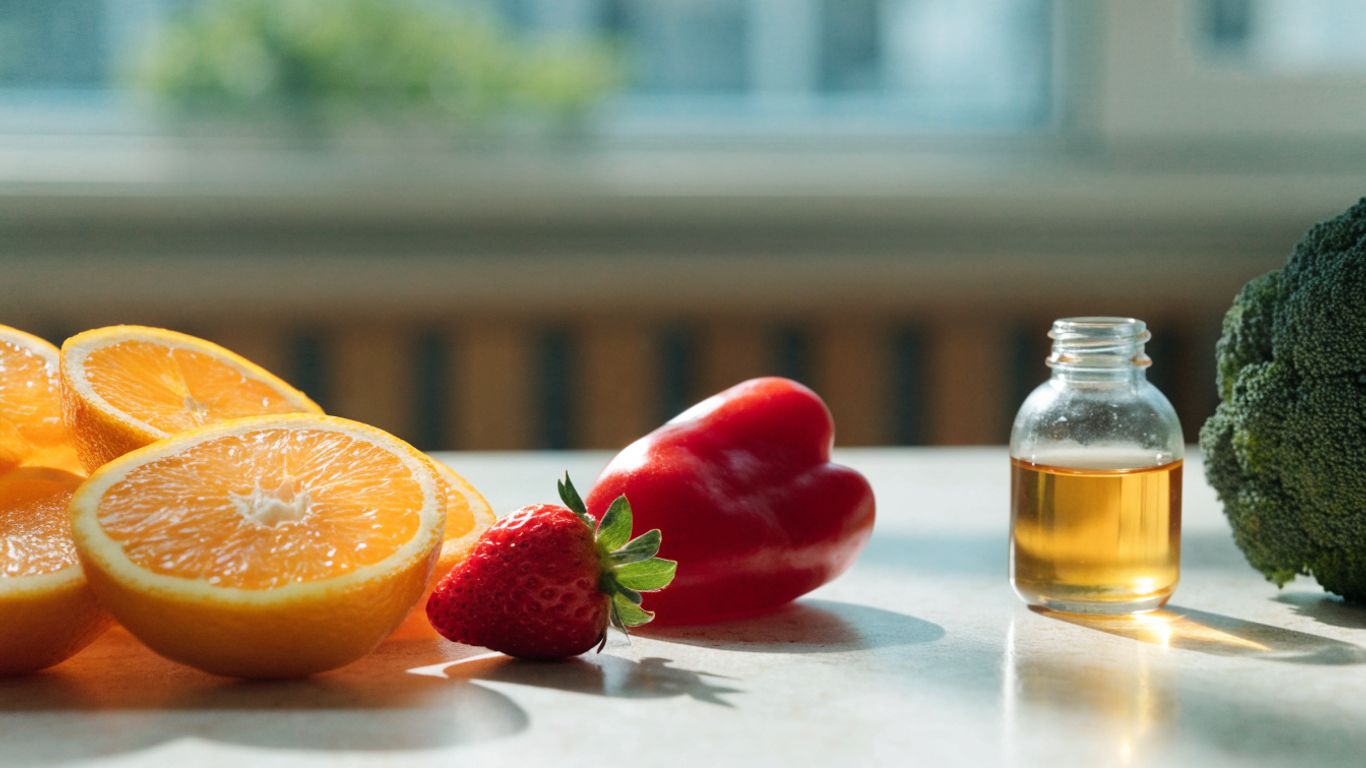
Vitamin C is needed for collagen formation and also acts as an antioxidant in the body. It comes from foods such as citrus, berries, peppers, and broccoli, while topical vitamin C products are a separate option people may consider in a skincare routine. Neither eating nor applying vitamin C promises a particular cosmetic result, but getting enough through food supports normal body functions.
The distinction between food, oral supplements, and topical products can help keep expectations realistic. Here is a quick comparison of what each route generally offers and what to keep in mind.
| Route | General role | Practical note |
|---|---|---|
| Food | Supplies vitamin C as part of a varied diet | Include fruits and vegetables regularly |
| Oral supplement | Adds vitamin C to the diet | More is not automatically better |
| Topical product | Delivers a cosmetic ingredient to the skin | Formula and skin tolerance matter |
I’d start with food as the everyday foundation, then consider a topical product only if it fits comfortably into a routine. For meal ideas that pair colorful produce with other nourishing choices, see these skin-supportive foods. If a product stings or causes ongoing irritation, stop using it and seek appropriate advice instead of assuming that discomfort means it is working.
3. Vitamin D for skin barrier health
Vitamin D is important to normal body functions, and the skin can make it after exposure to ultraviolet B radiation. That does not mean I’d recommend seeking extra sun for skin health: UV exposure can damage skin, so sun protection remains important. A healthy-looking barrier depends on more than one nutrient, including the skin’s own structure and everyday care.
Some foods, such as fatty fish and fortified products, provide vitamin D, though intake varies. A clinician can help assess whether a blood test or supplement is appropriate, especially when risk factors for low vitamin D are present. I would avoid guessing at a high dose based on skin appearance alone.
For routine care, a gentle cleanser, a moisturizer suited to your skin, and sensible sun protection are practical starting points. These steps do not replace medical care for persistent dryness, rash, or inflammation. If a skin change is ongoing, I’d ask a health professional to help identify its cause rather than assume it reflects a vitamin shortfall.

4. Vitamin E for antioxidant protection
Vitamin E is a fat-soluble antioxidant found in foods such as nuts, seeds, and some vegetable oils. It helps protect cells from oxidative stress as part of the body’s normal biology, but that does not translate into a promise that a vitamin E supplement will visibly improve skin. A balanced eating pattern is generally a more sensible starting point than adding supplements without a clear need.
Topical vitamin E appears in some skincare products, often alongside other ingredients. People’s skin can react differently to a given formula, and a product’s presence of vitamin E does not by itself establish how well it will suit a person or address a concern. If you’re sensitive or prone to irritation, testing a new product cautiously is more useful than layering several new products at once.
I’d keep the basics in view: protect skin from excessive sun exposure, use a moisturizer that feels comfortable, and choose foods that provide a range of nutrients. Supplements can interact with medicines or be inappropriate for some people, so it’s wise to check with a clinician or pharmacist before starting one. Skin appearance alone is not a reliable way to diagnose a vitamin deficiency.

5. Vitamin K for a healthy-looking complexion
Vitamin K is essential for normal blood clotting, and it is present in foods such as leafy greens. It is sometimes discussed in connection with the appearance of dark circles or visible discoloration, but evidence for topical vitamin K as a broad complexion solution is limited. I’d be cautious about treating a popular ingredient claim as proof of a reliable result.
A healthy-looking complexion can be influenced by sleep, genetics, sun exposure, irritation, and many other factors. New or changing discoloration may have a range of causes, so a qualified clinician can offer a more useful assessment than a vitamin guess. I would not use supplements to try to correct a visible skin change without professional guidance.
For everyday nutrition, leafy greens can fit naturally into meals, alongside other vegetables and protein sources. This supports a varied diet without suggesting that any one food or nutrient will transform skin. If a concern is persistent or accompanied by other symptoms, it is worth asking a clinician what evaluation makes sense.
6. Vitamin B3 (niacin) for barrier support
Vitamin B3 includes niacin and its related form, niacinamide, and it plays a role in normal energy metabolism. In topical skincare, niacinamide is used in products intended to support the skin barrier and improve the look of uneven tone or texture, although results vary by person and formula. The steady, simple routine usually matters more than piling on multiple actives.
Niacin is found in foods such as poultry, fish, peanuts, and whole grains, and the body can also make some from the amino acid tryptophan. A typical balanced diet supplies it for many people. High-dose niacin supplements are not a casual skin treatment and can cause side effects, so I’d discuss them with a health professional rather than self-prescribe.
If you want to try a niacinamide product, introduce one new item at a time and give your skin a chance to show how it responds. You can find more routine-building guidance when thinking through everyday skincare choices. Stop a product that causes persistent irritation, and seek professional advice for ongoing symptoms or a suspected deficiency.
7. Vitamin B5 for hydration
Vitamin B5, also called pantothenic acid, is involved in normal energy metabolism. In topical products, panthenol is a form related to vitamin B5 that is commonly used as a conditioning ingredient; it can help a formula feel moisturizing, though it is not a substitute for diagnosing or treating a skin condition. I see hydration as a routine goal, not a vitamin claim that guarantees a particular finish.
A few simple habits can make a moisturizer-focused routine easier to maintain without turning it into a long list of products. I’d keep the steps practical and pay attention to how skin feels over time:
- Use a gentle cleanser that does not leave skin feeling stripped.
- Apply a moisturizer that suits your skin and climate.
- Use sun protection during daytime outdoor exposure.
- Introduce new products one at a time to spot irritation.
Those habits can support comfort, but persistent tightness, flaking, or itching may have causes that a moisturizer alone will not address. Seek medical advice if symptoms continue or worsen. B5 is present in a range of foods, including meat, legumes, eggs, and whole grains, so a varied diet is a reasonable nutritional foundation.

8. Vitamin B7 (biotin) for skin health
Biotin, or vitamin B7, helps the body use nutrients and is involved in normal metabolism. Severe biotin deficiency can affect skin and other parts of the body, but it is uncommon, and there is limited reason to expect supplements to improve skin when a person already gets enough. I would not treat biotin as a general-purpose glow supplement.
Biotin occurs in foods such as cooked eggs, nuts, seeds, and legumes. Supplements are sometimes marketed for beauty, but they are not risk-free: high doses can interfere with certain laboratory test results. Tell a clinician and laboratory staff about biotin use before blood tests, and ask whether a supplement is appropriate for your situation.
If a rash or other skin symptom concerns you, an assessment is more useful than starting a high-dose supplement on your own. A clinician can consider nutrition, medications, and other possible causes. For most people, a varied diet and a manageable routine are more grounded choices than assuming a single nutrient explains their skin.
9. Vitamin B9 (folate) for cell growth
Folate is a B vitamin found naturally in foods, while folic acid is a form used in supplements and fortified foods. It is needed for normal cell division and other important processes, but taking extra folate is not a proven route to a brighter complexion when intake is already adequate. I’d think about it as a general nutrition need rather than a targeted skincare fix.
Beans, leafy greens, and some fruits provide folate, and fortified grain products can provide folic acid. Needs vary, and anyone who is pregnant, planning pregnancy, or managing a health condition should follow qualified guidance about supplementation. It is especially important not to self-treat symptoms with large doses when their cause is unclear.
Skin renews itself as part of normal biology, but visible changes are affected by many influences beyond folate. If you are worried about a deficiency, a clinician can help decide whether an evaluation is appropriate. Meanwhile, regular meals with varied foods are a practical way to support overall nutrition.
10. Vitamin B12 for normal skin cell function
Vitamin B12 supports normal blood and nerve function and is also involved in cell processes. It is naturally found in animal-derived foods, with fortified foods and supplements offering options for people who avoid those foods. B12 is essential, but extra intake is not a guaranteed way to improve skin if levels are already sufficient.
A deficiency can have health effects, and the likelihood of low B12 may be higher for some people, including those with certain dietary patterns or absorption issues. A clinician can help assess symptoms and decide whether testing or supplementation is warranted. I would not rely on complexion changes alone to decide whether B12 is low.
In some people, B12 supplements have been associated with acne-like breakouts, though this does not happen to everyone. If a new supplement coincides with a skin change, discuss it with a clinician before stopping prescribed treatment or making other major changes. A thoughtful approach considers the whole health picture, not just a single vitamin or product.
Conclusion
Vitamins contribute to normal body and skin functions, but they are only one part of the picture. I’d build from varied meals, sun protection, and a simple skincare routine, and seek professional guidance for persistent concerns or suspected deficiencies rather than relying on high-dose supplements or promises of an instant glow.
Frequently Asked Questions
Which vitamin is best for glowing skin?
There is no single best vitamin for everyone. Vitamins support different normal functions, and skin appearance depends on many factors, including genetics, routine, environment, and overall health.
Can vitamins improve skin appearance?
Correcting a genuine deficiency may support normal health, but taking extra vitamins when levels are adequate does not guarantee a visible change. A clinician can help assess suspected deficiencies.
Should I take supplements for clearer skin?
Supplements are not a universal skin treatment and may cause side effects or interact with medicines. Ask a health professional before starting one, especially at high doses.
Can vitamin C be used in a skincare routine?
Topical vitamin C is an option in some routines, but products vary and may not suit every skin type. Introduce a new product cautiously and stop if irritation persists.
Does vitamin D from sunlight help skin?
The skin can make vitamin D after UVB exposure, but seeking extra sun carries risks. Sun protection is important, and a clinician can advise about vitamin D intake or testing.
Does biotin help skin if I am not deficient?
There is limited reason to expect biotin supplements to improve skin when intake is adequate. High doses may also interfere with some laboratory tests.
When should I see a dermatologist about a skin concern?
Seek professional advice for persistent, worsening, painful, or changing symptoms, or when a rash or discoloration has no clear explanation. A dermatologist can help identify causes and discuss suitable care.